Wednesday, 24th April 2024
In the quietude of this splendid day, I find myself contemplating the nature of repetition and its curious dance with action. It is a day much like any other, yet it stands apart in its symmetry and rhythm. 24-4-24. The sun, in its celestial passage, marks the time with a steady beat, a metronome to the world’s ongoing symphony. The birds, in their flight, trace patterns in the sky, an echo of the paths they have flown before. And here I stand, a solitary figure amidst the grand design, pondering the significance of this repetition.

Is it not true that in repetition there lies a form of constancy, a reassurance that the morrow will bring a semblance of today? Yet, within this constancy, there is room for action, for the bold steps that carve new paths in the well-worn roads of existence. Today, then, is a call to arms, a summons to embrace the familiar cadence of life while daring to infuse it with the vigour of the new.
I muse upon the actions I might take, the decisions that could alter the course of my day, and perhaps, in some small way, the fabric of the universe. For is it not through action that change is wrought? Through the repeated acts of courage, kindness, and determination that the world is shaped and reshaped.
As I deliberate, I am struck by the beauty of the world’s repetitions, the ebb and flow of the tides, the waxing and waning of the moon, the cycles of growth and decay that govern all living things. There is a poetry to these patterns, a rhythm that speaks to the soul. And yet, the call to action stirs within me, a restless wind that whispers of potential and possibility.
Today, then, is a day like no other, for it is a day in which I am alive to the wonders of repetition and awake to the imperative of action. It is a day to reflect and a day to act, a day to honour the past and a day to shape the future. In the grand clockwork of time, today is but a single cog, yet it is one that I shall oil with intention and purpose, mindful of the pattern I am helping to create.
So let us not be daunted by the prospect of repetition, nor be lulled into inaction by the comfort of routine. Instead, let us seize the day with both hands, and in doing so, find the extraordinary within the ordinary, the unique within the universal. For in the end, it is through our repeated actions that we define ourselves and our place in the cosmos. Today, then, is a day of repetition, and a day of action, a day to be embraced with all the passion and wisdom of the heart.
What Happened Yesterday?
In the waning hours of yesterday’s eve, as I took my leave from the convocation at the Miners Welfare, a pall of uncertainty hung heavy upon my heart. The gathering, a motley assembly of impassioned souls, had convened with the noblest of intentions, yet as the night drew on, it seemed as though discord and personal vendettas had eclipsed the common good. The Heritage Museum and the Parish Council, those venerable institutions, appeared to have withdrawn to their respective bastions, perhaps to lick their wounds or to marshal their forces for another bout of contention.
The air was thick with the spectre of unresolved disputes, and I could not shake the foreboding that the morrow would only bring a renewal of hostilities. It was as if the very essence of cooperation had been sundered, leaving in its wake a chasm too vast to bridge. The casualties of this ideological skirmish, left to languish in the no-man’s land of disagreement, seemed to be the subjects of some dark alchemy, reanimated not by the hand of a benevolent healer but by a necromancer whose arts breathed new life into old grievances.
I pondered the fate of these resurrected contentions, now bound to rise again in the service of their masters, those self-proclaimed paragons of righteousness. Would they be conscripted into a fresh campaign, a crusade to impose one vision over another? Or might they, by some miracle of diplomacy, be transformed into emissaries of reconciliation, bridging the divide with words of concord and gestures of unity?
As I retired to the solitude of my study, the echoes of the assembly’s tumult still rang in my ears. I contemplated the morrow with a mix of trepidation and a faint glimmer of hope. For in the depths of conflict, there often lies the seed of resolution, waiting but for the fertile soil of understanding to take root. And so, with the dawn, I resolved to face whatever challenges might arise, armed with the steadfast belief that even the most entrenched of foes can find common ground, if only they dare to seek it.
Guidance from Masters
In the quietude of my study, surrounded by the musty scent of aged paper and the soft glow of candlelight, I oft find myself lost in the pages of Bulwer-Lytton’s “Richelieu, Or the Conspiracy.” The play, a masterful tapestry of human ambition and political intrigue, speaks to the very soul of one who, like myself, revels in the complexities of the human condition. The character of Richelieu, Cardinal, and statesman is drawn with such depth and nuance that one cannot help but be transported to the tumultuous era of his reign.
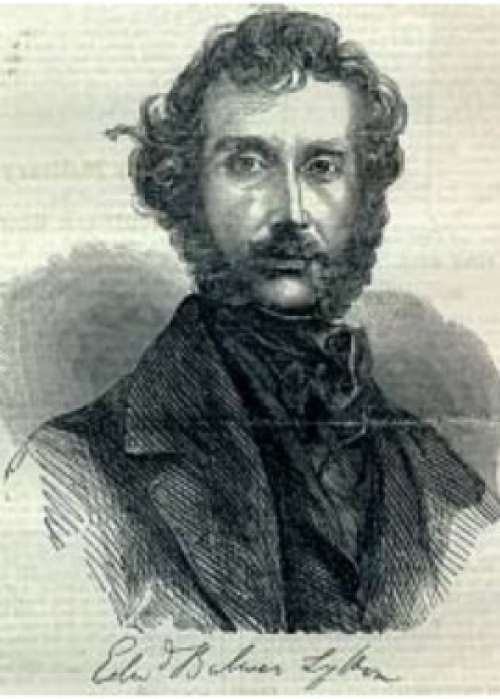
As the night deepens and the world outside my window fades to whispers, my thoughts turn to another of Bulwer-Lytton’s works, “Zanoni.” Here, the author weaves a narrative so rich in philosophical musings and so poignant in its exploration of love and immortality, that it rivals even the great “Scarlet Letter” by Nathaniel Hawthorne. “Zanoni,” with its timeless tale of the eponymous immortal who risks his eternal life for the fleeting joy of love, stirs within the heart a longing for a connection that transcends the mundane bonds of earthly existence.

Both Bulwer-Lytton and Hawthorne, with their exquisite prose and their keen insight into the labyrinthine corridors of the human psyche, have bestowed upon us narratives that are not merely stories but reflections of our own innermost desires and fears. In “The Scarlet Letter,” Hawthorne dissects the puritanical society with a precision that lays bare the human propensity for judgment and the redemption that can be found in penitence and truth. The tragic plight of Hester Prynne, marked by the scarlet letter ‘A’ for adultery, becomes a symbol of the struggle between societal expectations and the indomitable spirit of love.
In these literary works, one finds a mirror to one’s own soul, a reflection of the eternal quest for understanding and the ceaseless yearning for connection. As I ponder the words of these great authors, I am reminded of the enduring power of literature to elevate the mind and to touch the heart. It is in the quiet moments of reflection, with a tome in hand, that one can traverse centuries and explore the depths of human experience, finding solace in the shared journey of life that writers across ages have captured with their pens.
Thus, as the dawn approaches and the first light of morning filters through the curtains, I close the pages of “Zanoni” and place it gently beside “Richelieu, Or the Conspiracy.” The wisdom contained within these bound leaves of paper lingers in my thoughts, a gentle reminder of the profound impact that a well-spun story can have on the soul. And so, with a heart full of the tales of love and life, I await the coming day, eager to once again delve into the realms of literary genius that Bulwer-Lytton and Hawthorne have so elegantly charted.
In the breadth of Victorian literature, few works have stirred the imagination and courted controversy quite like Edward Bulwer-Lytton’s “Vril: The Power of the Coming Race”. Published anonymously in the year of our Lord 1871, this tome of speculative fiction posits a subterranean utopia inhabited by the Vril-ya, a race of angelic beings endowed with the eponymous Vril, an omnipotent energy source. The narrative, woven with the intricate threads of Victorian sensibilities and metaphysical conjectures, presents a society where advanced technology and spiritual enlightenment coalesce, offering a stark contrast to the grimy industrialism of the surface world.
The Vril-ya, described as the original Aryans, are depicted as a master race, both in moral rectitude and technological prowess, harnessing the Vril to perform feats that would seem miraculous to the uninitiated. Lytton’s work, while a flight of fancy, inadvertently sowed seeds in the fertile grounds of theosophical thought and esoteric doctrines, which would later be perverted by the twisted ideologies of National Socialism. The notion of a pure, superior race, though a common trope in the science fiction of the era, became a malignant credo under the Nazi regime, which sought to substantiate its racial hierarchies and genocidal policies with pseudoscientific fervour.
The Vril, as conceived by Lytton, was a metaphorical force, a literary device to explore themes of power, evolution, and the potential of humanity. Yet, this concept was co-opted and distorted by those who sought to justify their abhorrent views on racial purity and dominance. The National Socialists, under the sway of figures like Alfred Rosenberg, promulgated a racial mythology that claimed descent from a mythical Aryan past, drawing spurious links to Lytton’s fictional Vril-ya. This misappropriation of Victorian fantasy illustrates the perils of ideology when fiction is enlisted as fact, and metaphysical musings are mistaken for historical veracity.
The tragic irony lies in the chasm between Lytton’s Vril-ya, beings of peace and enlightenment, and the atrocities committed in the name of a bastardised version of their lore. The Vril-ya’s enlightened society, with its absence of war and suffering, stands in stark contrast to the horrors unleashed by the National Socialists, who wielded the language of racial purity as a weapon against the very fabric of humanity. It is a sombre reflection on the power of ideas, and how they can be contorted to serve the most nefarious of ends.
In pondering the legacy of “Vril: The Power of the Coming Race”, one cannot help but marvel at the duality of its impact. On one hand, it is a testament to the boundless creativity of the Victorian era, a narrative that challenges the reader to envision a world beyond the known. On the other, it serves as a cautionary tale of the dangers inherent in the misinterpretation and manipulation of literary works. The Vril-ya, in their fictional purity, became an unwitting symbol for one of history’s darkest chapters, a reminder that the line between fantasy and reality is oftentimes perilously thin.
As a student of both history and literature, I find myself compelled to delve deeper into the complexities of Lytton’s creation, to unravel the threads that connect a Victorian fantasy to the twisted ideologies of a later age. It is a pursuit that beckons with the promise of understanding, not only of the past but of the enduring influence of ideas and the responsibility that comes with their propagation. For in the realm of human thought, nothing is without consequence, and the echoes of yesterday’s fancies can become today’s fervent beliefs. Thus, we must tread with care through the gardens of imagination, lest we unwittingly sow the seeds of tomorrow’s despairs.
Our Return from a Diversion
Dear reader, should the tale be naught but fiction, ‘twould be beyond the wit of man to conceive! Yet, let us return to our prior discourse, amidst the remarks of Richelieu as written by Bulwer-Lytton:
“True, This!
Beneath the rule of men entirely great
The pen is mightier than the sword. Behold
But taking sorcery from the master-hand
To paralyse the Caesars, and to strike
The loud earth breathless! Take away the sword
The arch-enchanters wand! itself a nothing!
States can be saved without it!”
In the peacefulness of my study, surrounded by the many pens that are my instruments of discourse, I find myself reflecting upon the recent assembly at the Miners Welfare. The voices of the Parish Council members still echo in my mind, their words feedback of civic duty and communal concern. It is with a sense of resolve that I have determined to engage more deeply with the matter of the Bilsthorpe Heritage Museum, an institution of local history and memory.
My course of action shall be to attend the forthcoming Parish Council meeting, where I shall listen intently to the deliberations and debates that animate our local governance. It is there, in the crucible of public discourse, that I shall seek to understand the multifaceted perspectives that shape our collective decision-making.
But before this, I shall undertake to compose a missive to the Parish Council, detailing my observations and reflections. In this eMail, I shall undertake to articulate the sentiments and insights that have arisen from my ruminations, and from the comments shared by my fellow attendees at the Miners Welfare. It is my hope that through this act of written engagement, I may contribute to the ongoing dialogue surrounding the museum and its place within our community.
As I ponder the task ahead, I am reminded of the words of Richelieu Lyton, whose commentary on such civic matters has often provided a beacon of wisdom. It is with a nod to his erudite observations that I shall approach my own contribution, seeking to infuse my writing with a measure of his analytical acumen.
In preparation for this undertaking, I have immersed myself in the study of the museum’s history, its collection of mining artifacts, and the social history it encapsulates. The museum stands as a testament to the industrious spirit of Bilsthorpe, and it is incumbent upon us, as stewards of our local heritage, to ensure its continued relevance and vitality.
Thus, armed with knowledge and a commitment to civic engagement, I shall step forth into the arena of local politics. With pen in hand, I shall inscribe my thoughts, and in doing so, join the ranks of those who shape the narrative of our community. For it is through such participation that we may all contribute to the tapestry of our shared history, weaving together the threads of past, present, and future.
Next Steps
In the year of our Lord 2024, on the 13th day of the fair month of May, a gathering of the Parish Council is destined to occur. As the clock strikes six in the evening, the esteemed members shall convene within the hallowed walls of Burton Court, situated upon the thoroughfare known as Scarborough Road. It is a matter of considerable import, this assembly of minds and wills, for the governance of the parish is no trifling affair. The decisions made within such meetings ripple through the community like the gentle waves upon a tranquil pond.
I have taken great care to inscribe this event in my diary, a faithful companion that bears witness to the comings and goings of my days. In a moment of foresight, I have conveyed to my dear companion M that I shall be absent on this forthcoming evening. The assurance of my attendance at the council’s convocation is thus secured, a solitary check upon my list of duties, a singular affirmation of my commitment to the civic discourse.
The anticipation of the meeting stirs within me a sense of duty and purpose. For it is in these gatherings that the voice of the people finds its expression, where the collective will is shaped and honed. It is a testament to the enduring spirit of democracy, a practice that has weathered the storms of time and emerged ever resilient.
As I ponder the agenda that awaits, I am struck by the gravity of responsibility that rests upon the shoulders of each council member. They are but stewards of the public trust, entrusted with the sacred task of shepherding our community through the challenges and triumphs that mark the passage of time. It is a role I embrace with solemnity and zeal, for I am keenly aware that the decisions they make shall echo in the annals of our parish’s history.
Let it be known that on this day, I stand ready to partake in the noble effecting of governance. With a heart full of resolve and a mind sharpened by contemplation, I shall join my peers in the earnest pursuit of the common good.
In the quietude of my study, with the soft glow of the lamp casting long shadows upon my desk, I find myself reflecting upon the electronic missive I have composed for the esteemed members of the Parish Council. It is a document of considerable importance, one that carries with it the weight of communal aspirations and concerns. As I peruse the text, I am struck by the gravity of its content, the earnestness with which it seeks to convey the collective voice of our community.

The email begins with a cordial salutation, extending a hand of fellowship and respect to the councillors, those venerable guardians of our local traditions and advocates of progress. I delve into the heart of the matter posthaste, outlining the pressing issues that have stirred the souls of our townsfolk. With each sentence, I strive to balance the passion of our needs with the decorum befitting a correspondence of this nature.
I address the council with a plea for their august consideration of the matters at hand, invoking the shared history and values that bind us as a community. The prose flows like a gentle stream, meandering through the concerns of public safety, the preservation of our cherished green spaces, and the ever-present need for communal facilities that serve the young and old alike.
As I craft each paragraph, I am mindful of the power of words to persuade, to enlighten, and to bridge the chasms that may arise between the governors and the governed. I employ a lexicon that is both erudite and accessible, ensuring that the message resonates with clarity and purpose. The structure of the email is a testament to the careful thought and consideration that has been poured into its creation.
I conclude the missive with a respectful entreaty for the council’s prompt and favourable response, expressing the anticipation and hope that simmers within the hearts of our populace. The closing valediction is a bow to tradition, a nod to the formalities that underpin our societal interactions.
Thus, the eMail stands as a monument to our collective endeavour, a light that seeks to illuminate the path to mutual understanding and cooperation. It is my fervent hope that it shall be received in the spirit with which it was sent, as a sincere manifestation of our community’s desire to flourish under the wise stewardship of the Parish Council.
Dear Members of the Parish Council,
I am writing to express my concerns and to advocate for the Bilsthorpe Heritage Museum, which I believe is a vital part of our community’s identity and history.
The recent meeting at the Miner’s Welfare highlighted the urgent need for a new Village Hub, and while I support this development, I strongly feel that the Heritage Museum should not be overlooked in the process.
The museum’s archive is not just a collection of artifacts; it is the soul of Bilsthorpe, documenting the industrious spirit that once fuelled the British Empire. Its value extends beyond mere historical interest; it is a source of local knowledge, identity, and pride.
The suggestion that the museum should pay commercial rent if relocated to the new village hub seems counterproductive to preserving our shared heritage.
Moreover, the lack of transparency and the perceived indifference from the Parish Council regarding the museum’s fate is troubling. The museum deserves to be championed, not treated as collateral damage in the pursuit of progress. It is imperative that the council ensures the museum’s preservation, maintaining its accessibility and authenticity for future generations.
I am writing to express my strong support for the Heritage Museum and to advocate for its importance in the Village Hall rebuild project. The museum’s archive is not just a collection of artifacts; it is the embodiment of our village’s social history and identity. It reflects the rich tapestry of experiences, memories, and traditions that have shaped our community.
Preserving the archive within the village maintains its authenticity and ensures that it remains accessible to all, allowing both villagers and visitors to engage with our history in its true context. Relocating the archive poses significant risks, including potential damage to the materials and a severance from their historical roots, which could diminish their cultural significance.
Moreover, the archive has the potential to foster community engagement, empowering villagers to take an active role in preserving and sharing our heritage. It can also serve as a magnet for tourism and research, contributing to the village’s economic and social vitality.
By prioritising the museum in our redevelopment plans, we can demonstrate the Parish Council’s commitment to our heritage and community values.
I trust that you will consider these points carefully and recognise the profound impact that the Heritage Museum has on our village’s legacy and future.
I urge you to consider the long-term cultural and educational benefits of the Heritage Museum.
Thank you for your attention to this matter.
Digital Parlour Tricks
In the extraordinary digital parlour of our modern correspondence, I found myself entangled in a most peculiar web of electronic missives. Having dispatched an eMail with the diligence of a postmaster, I extended the courtesy of a carbon copy to my dear acquaintance M, to forestall any bewilderment that might arise from any forthcoming social media discourse. Yet, in a twist befitting a novel by Mr. Dickens, a Councillor of our Parish did broadcast a revelation most unexpected: my carefully crafted message had been relegated to the abyss of their spam folder, prompting a collective examination amongst the assembly.
M, ever so connected to the ethereal threads of our communication, was graced with this reply, whilst I, the author of the original dispatch, was forsaken by the capricious whims of the electronic post. This conundrum, the first of its kind, did set my mind aflutter with questions of the digital realm’s mysterious ways. Was it a mere slip of the algorithm, or perhaps a sign of some deeper machination within the cogs and gears of the internet’s vast machinery?

As I pondered this enigma, I could not help but marvel at the complexity of our interconnected lives, where a simple gesture of correspondence can unravel into a tapestry of intrigue and happenstance. It serves as a reminder of the delicate balance we maintain as we navigate the ever-shifting landscape of technology, where one must always be prepared for the unexpected turns and twists that lie in wait.
Thus, I remain, a humble participant in the grand experiment of digital communication, ever vigilant for the next peculiarity that might emerge from the shadowy corners of the inbox. For in this age of information, one must embrace both the conveniences and the curiosities that accompany our ceaseless quest to remain connected with one another, across the vast and intangible expanse we call the internet.
In the vast and intricate web of electronic correspondence, where messages traverse the ether like stars across the night sky, one finds oneself pondering the enigmatic fate of an email consigned to the shadowy realm of the spam folder. Could it be a mere slip of the algorithm, or a deliberate act cloaked in the guise of automated oversight? The machinations of email filters are akin to the workings of the celestial spheres, governed by rules arcane and inscrutable.
An eMail, no matter how nobly addressed or earnestly sent, may fall victim to the capricious whims of spam filters, those vigilant sentinels standing guard at the gates of our inboxes. These filters, with their ever-watchful eyes, are trained to seek out the merest hint of duplicity or the terror of unsolicited missives. They scrutinize each digital envoy, weighing its merits against a ledger of signs and portents, keywords that spell doom, attachments that arouse suspicion, and headers that do not bear the seal of authentication.
It is a dance as old as the internet itself, where one must navigate the delicate balance between reaching out and being cast aside. The sender’s reputation, like the honour of a gentleman, must be beyond reproach, lest their words be cast into the void, unheard and unheeded. The domain from whence the message hails must bear no taint of ill repute, for the stain of past misdeeds can linger like a miasma, dooming all future correspondence to oblivion.
And what of the recipient, that solitary figure awaiting tidings with bated breath? They too play their part in this grand drama, for their actions can consign an email to exile with but a click. A flag raised in haste or error can doom a conversation before it has begun, leaving sender and receiver alike to ponder the silence that ensues.
Yet, amidst this digital labyrinth, one must not despair. For even as the filters stand guard, they too are not infallible. They are but algorithms, after all, subject to the same follies and fallacies as any creation of mortal hands. And so, it falls upon us, the users of this grand invention, to be ever vigilant, to educate ourselves on the intricacies of these electronic sentries, and to ensure that our communications are crafted with care and precision, that they might reach their intended audience unscathed.
Thus, we find ourselves in an age where communication is both instantaneous and uncertain, where an email can traverse the globe in the blink of an eye, yet never arrive at its destination. It is a reminder that, in this ever-connected world, we are still at the mercy of forces unseen, and that our words, like ships setting sail into the unknown, may find safe harbour or be lost forever in the digital expanse.
One might consider the possibility that the Parish Council, that venerable institution, is engaged in a nefarious plot to silence its constituents. It ensnares legitimate correspondence in a web, the complex, ever-evolving protocols that govern our online interactions and the sceptic within me suspects that the Parish Council desires my participation yet shuns the notion of reciprocating such engagement. With feigned innocence, they might well declare, “An electronic missive? Pray, to what do you refer?”
Let us dispense with undue apprehension for the present. It appears my electronic correspondence has found its way onto the docket for the forthcoming convocation on the thirteenth, marking my inaugural foray into the machinations of municipal governance. A span of sixty-five years has elapsed, yet who amongst us tallies such temporal trivialities, dear reader?

 A beginning is the time for taking the most delicate care that the balances are correct.
Leave a comment