Friday, 26th April 2024
In the quiet aftermath of the village meeting’s tumult, I find myself in a contemplative state, pondering the essence of my daily deeds. The act of litter picking, seemingly mundane, transcends the mere physicality of the task. Each piece of discarded refuse, a silent testament to the fleeting nature of human consumption, finds its way into my grasp, plucked from the earth as if to right a small wrong in the grand tapestry of existence.
As I traverse the familiar paths, the rhythm of my movements becomes a meditative dance with the environment. The crisp rustle of a candy wrapper, the clinking of an empty bottle, the whisper of a plastic bag caught in the thorny embrace of a bush, these are the notes in the symphony of restoration I conduct. With every item rescued from the ground, I am not merely cleaning; I am engaging in a silent dialogue with nature, acknowledging our shared responsibility to cherish and protect.
The village, with its quaint charm and bustling life, remains largely oblivious to the quiet transformation taking place in its margins. Children play, elders gossip, lovers stroll, all against the backdrop of my solitary mission. Yet, this mission is far from lonely. It is a partnership with the unseen forces that strive for balance and harmony. The wind lends me its energy, the sun bestows its warmth, and the earth grants me its patience.
In this act of service, I find a profound connection to the cycle of life. What is discarded is not lost; it is given a chance for redemption, a new purpose. The plastic bottle may find new life in the form of recycled art, the aluminium can may journey to become part of a structure, and the paper may return to the soil, enriching it for future growth.

Thus, each litter pick becomes a chapter in a larger narrative, one of resilience and hope. It is a narrative that speaks to the power of individual action, the beauty of caring for our shared home, and the infinite possibilities that arise from simple acts of kindness. In the grand scheme, my efforts may seem like mere ripples in an ocean, but even ripples can build into waves that reshape shores.
So, dear reader, as the echoes of last night’s meeting fade into memory, know that the work continues. It is not just litter picking; it is an affirmation of life’s perpetual renewal, a humble contribution to the world’s enduring beauty, and a testament to the enduring spirit of community. It is, in every sense, a labour of love, a love for the village, for the environment, and for the intricate web of life that connects us all.
As the sun casts its benevolent rays upon the Earth, thawing the remnants of winter’s touch, one can sense the subtle stirrings of spring. The Earth, in its perpetual journey around the sun, experiences the ebb and flow of seasons, a testament to the delicate balance that sustains life. The climate, a complex tapestry woven from the threads of temperature, precipitation, and wind, serves as the backdrop against which all earthly dramas unfold. It is the maestro of biodiversity, the architect of ecosystems, and the silent guardian of our planet’s intricate natural processes.
In the grand narrative of the Earth, the climate is both a storyteller and a story, evolving through the ages, shaped by the celestial dance of Earth and sun, and the anthropogenic influences that have become more pronounced in recent epochs. The climate’s narrative is etched in the rings of ancient trees, whispered in the rustling leaves, and recorded in the polar ice, a chronicle of a world in constant flux. It speaks of times when the planet was shrouded in ice, epochs when tropical warmth reached even the most polar latitudes, and eras marked by the rise and fall of mighty civilizations that once thought themselves invulnerable to nature’s whims.
Yet, this narrative is not merely one of past glories and bygone disasters. It is an ongoing saga, where each day writes a new line, each season adds a new chapter, and every generation contributes its verse to the ever-unfolding story. The climate of today reflects both natural cycles and human activity, a system pushed and pulled by the burning of fossil fuels, deforestation, and the pursuit of industrial growth. It is a delicate equilibrium, increasingly tipped towards unpredictability and extremes, manifesting in the melting of glaciers, the intensification of storms, and the shifting patterns of weather that challenge the resilience of the living world.
As a steward of the Earth, one embarks on a litter-picking adventure, not merely as a task of tidying but as a ritual of respect for the planet. Each piece of refuse collected is a small victory in the quest to preserve the environment, a tangible act of defiance against the forces of pollution and neglect. It is a humble contribution to the health of the planet, a statement of care for the home that nurtures and sustains all life.
In this act, there is a deeper connection to the Earth’s climate, an acknowledgment of the intricate web of life that is affected by every action, every decision, and every moment of apathy or awareness. To pick litter is to engage in a dialogue with the Earth, to listen to its needs, and to respond with a commitment to safeguard its future. It is to recognize that the climate is not a distant phenomenon, observed through the lens of scientific inquiry alone, but a living, breathing entity that touches every aspect of life.
On this particular Friday, as one marvels at the beauty of a day poised between winter’s retreat and spring’s advance, it is an opportunity to reflect on the role each individual plays in the grand scheme of the Earth’s climate. It is a chance to ponder the legacy that will be left for the generations to come, a legacy that can be shaped by the simple, yet profound, acts of conservation and care. For in the end, the Earth’s climate is not just a topic of study or a challenge to be overcome; it is the very stage upon which the drama of life unfolds, and each of us has a part to play in its preservation and protection.
Milankovitch Cycles
As the Earth dances through the cosmic expanse, its movements are not a simple twirl but a complex choreography that unfolds over millennia. This celestial ballet, known as the Milankovitch cycles, is a symphony of three primary movements: eccentricity, axial tilt, and precession. Eccentricity speaks to the shape of Earth’s orbit, a gentle ebb and flow from more circular to slightly elliptical paths around the sun, a rhythm that repeats roughly every one-hundred-thousand-years. Axial tilt, the angle at which Earth holds itself against the sun, shifts between 22.1 and 24.5 degrees over a forty-one-thousand-year cadence, altering the intensity of the seasons. Precession, the Earth’s slow gyration like a wobbling top, changes the timing of the seasons in a twenty-six-thousand-year pulse.
These cycles, named after Milutin Milenkovic, the Serbian astrophysicist who demystified them, are a testament to the intricate interplay between celestial mechanics and climatic shifts. They are the silent conductors of Earth’s climatic orchestra, influencing the rise and fall of ice ages, the waxing and waning of glaciers, and the subtle shifts in climate that have shaped the planet’s history. As the Earth’s orbit stretches and shrinks, the distribution of solar energy across its surface ebbs and flows, like the breath of some great cosmic beast. When the tilt is more pronounced, summers bask in stronger solar caresses, while winters retreat into deeper chills. And as the Earth’s axis points to different stars over thousands of years, the seasons themselves drift across the calendar, a slow-motion migration of heat and cold.

The Milankovitch cycles are a reminder of the Earth’s fragility and its enduring resilience, a delicate balance of forces that have allowed life to flourish. They whisper of a time when mammoths roamed a tundra that is now temperate forest, and they hint at future epochs that may see the Sahara bloom or the Amazon wither. In their cosmic pattern lies the ebb and flow of Earth’s biomes, the rise of civilizations, and perhaps even the fate of humanity itself.
Yet, these cycles are but one piece of the climatic puzzle. Human activity now injects a new variable into the equation, a rapid and relentless force that may outpace the gentle undulations of Milankovitch’s cycles. The burning of fossil fuels, the deforestation of continents, and the emission of greenhouse gases are like dissonant notes in the planetary harmony, accelerating changes at a rate that challenges the adaptability of life on Earth.
In the bedrock of Earth’s history, the Milankovitch cycles are fossilised with threads of gravitational pull and solar radiation, a pattern set against the backdrop of the cosmos. They serve as a humbling reminder of Earth’s place in the universe, a solitary sphere choreographed by the forces of nature, spinning through the void, its climate a dance of light and shadow.
In the geology of Earth’s climatic symphony, the gentle decrease in obliquity plays its part with a subtle, yet profound influence. As the axial tilt lessens, the sun’s fiery chariot rides a more temperate path across the sky, bestowing upon us winters that whisper rather than howl, and summers that murmur with a cooler breath. This celestial choreography, a slow dance spanning millennium, invites the snow and ice at the poles to extend their crystalline embrace, fashioning vast sheets of alabaster that, in turn, act as mirrors to the heavens, casting solar radiance back into the cosmic sea, nurturing a cycle of cooling that further softens the seasonal extremes.
Yet, this narrative is not merely an echo of ancient astronomical rhythms; it resonates with the lived experience of those who tread upon this isle’s green and changing land. The United Kingdom, with its tapestry of history and nature, feels the pulse of this planetary ballet. Observations and data whisper of winters that no longer bite with the same ferocity, suggesting a shift in the very heartbeat of the seasons. The Wheel of the Year, once aligned with the steadfast march of celestial markers, now seems to turn in a hesitant waltz with the evolving climate, its festivals a step out of time with the rhythm of the natural world.
On a day such as this, where April’s sun casts long shadows and the air holds a chill despite the light, one might ponder the arrival of spring. The buds on the trees and the bloom of the daffodils sing of renewal, yet there is a lingering note of winter’s refrain. It is in these moments of juxtaposition, where the expected gives way to the surprising, that the narrative of our environment is penned. Not in the ink of fanaticism or fear, but with the quill of observation and the ink of understanding, acknowledging the complexity of Earth’s climatic melody, a composition that we are only beginning to truly comprehend.
As we stand upon this threshold of seasons, where the old gives way to the new, it is a time for reflection and for looking forward. The shifting patterns of weather, the ebb and flow of temperatures, and the dance of the elements are but a part of a greater story. It is a story that speaks to the resilience and adaptability of life, to the ingenuity of humanity in the face of change, and to the enduring mystery of a planet that continues to reveal its secrets in the most unexpected of ways. In this narrative, each of us is both observer and participant, writing our chapter in the chronicle of this world, a world that spins not just through space, but through the very fabric of time itself.
Is it Just the Climate?
As the Earth spins silently in the vast expanse of space, a delicate blue orb teeming with life, it is undergoing a profound transformation. The evidence of warming is etched into the very fabric of the planet – from the receding glaciers that weep freshwater into swelling oceans, to the shifting patterns of migratory birds that no longer adhere to the ancient rhythms of the seasons. The atmosphere, once a stable blanket that cradled warmth, now thickens with the exhalations of industry, trapping heat in a relentless upward trend. The data speaks: temperatures recorded over decades at myriad weather stations across the globe whisper of incremental but inexorable change. The seas chart their own story, with rising levels documented by scientists, a testament to the melting ice and thermal expansion.
In the north, the Arctic ice retreats year by year, shrinking like a snowfield under a relentless sun, while the Greenland Ice Sheet, a colossal reservoir of ice, loses its mass with increasing speed, contributing to the ocean’s rise. The biosphere reacts – plants bloom prematurely in the confused spring, lobsters venture into waters once too cold for their kind, and the very composition of the atmosphere shifts, marked by carbon dioxide levels unseen in millennia. This carbon, with its unique isotopic signature, whispers of its origin, not the slow processes of nature, but the rapid combustion of fossil fuels since the dawn of the Industrial Revolution.
The Earth, in its silent orbit, is a witness to the impact of human industriousness, the collective actions of generations that have harnessed the power of ancient sunlight trapped in coal, oil, and gas. It is a warming that is measured not just by instruments, but by the living tapestry of the planet – the retreat of ice, the ascent of sea levels, the altered cadence of the natural world. To ignore this evidence is to pass a heavy burden onto the shoulders of future generations, a legacy of altered climates and reshaped coastlines. It is a choice, made in the present, that will echo through the ages, a decision that weighs upon the conscience of humanity. For the Earth, this pale blue dot, is not just a home but a repository of potential, a cradle for the dreams of every child born into the world, a world that is rapidly warming, irrevocably changed by the passage of time and the imprint of human activity.
The Earth is rapidly warming now, the evidence is there and to ignore it is to pass the problem on to future generations.
Repeat.
Repeat.
The Earth is Rapidly Warming
In the grand sweep of Earth’s climatic history, the Milankovitch cycles weave a pattern of astronomical predictability, a slow dance of celestial mechanics dictating the ebb and flow of ice ages with a rhythm set by the cosmos. They are the silent puppeteers of Earth’s glacial theatrics, pulling the strings of eccentricity, obliquity, and precession to choreograph the advance and retreat of vast ice sheets across continents.
Yet, as I ponder the current state of Earth’s climate, it becomes evident that the influence of these ancient cycles is but a whisper in the roar of modern warming. The Milankovitch cycles, operating on their languid timescales, have not significantly altered the amount of solar energy our planet has absorbed in the last 150 years. Indeed, NASA’s vigilant eyes in the sky, the satellites that tirelessly watch over our blue orb, have observed a slight decrease in solar radiation over the past four decades.
This observation stands in stark contrast to the rapid escalation of global temperatures, a phenomenon unfolding over mere decades rather than millennia. It is a warming that defies the slow, methodical pace set by the Milankovitch cycles, pointing instead to a more immediate and potent force at play. Human activities, particularly the relentless burning of fossil fuels, have tipped the scales, flooding the atmosphere with carbon dioxide and other greenhouse gases. This anthropogenic veil traps heat, driving temperatures upward with a speed and ferocity that the slow-moving cycles of Earth’s orbit cannot explain.
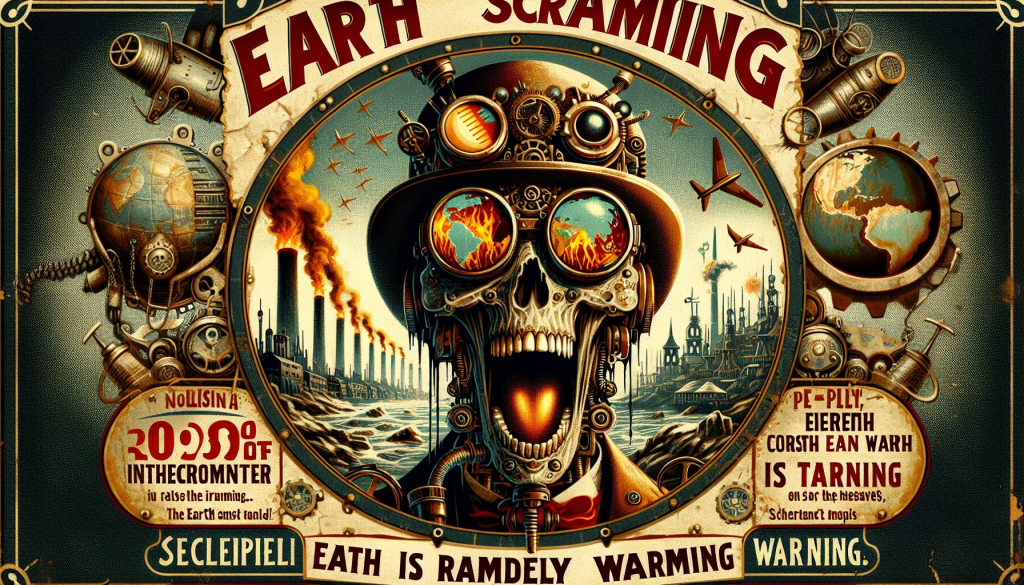
The evidence is clear and the scientific consensus resolute: the current warming is a product of human influence, a departure from the natural order governed by the Milankovitch cycles. It is a stark reminder of our role in this unfolding drama, a role that carries with it the weight of responsibility and the power to alter the course of our climatic future. As the custodians of this planet, it falls upon us to heed the lessons of the past while navigating the challenges of the present, to find a balance between progress and preservation.
In this pivotal moment, as we stand at the crossroads of potential futures, the wisdom of the Milankovitch cycles endures. They remind us that while the Earth’s climate is subject to the whims of orbital mechanics, it is also vulnerable to the will of its inhabitants. The cycles will continue their timeless march, indifferent to the plight of the civilizations that rise and fall in their wake. But for us, the denizens of this age, the choice is ours: to act with foresight and stewardship, or to watch as the delicate equilibrium that has sustained life for eons is irrevocably disrupted.
In the end, the Milankovitch cycles will persist, a cosmic metronome marking the passage of eons. But the legacy of our time, the mark we leave on the geological strata, will speak of the moment when humanity recognized its power and chose the path of harmony over discord, sustainability over short-sightedness. It is a choice that will echo through the ages, a testament to our understanding that we are not mere spectators of Earth’s climatic symphony, but active participants with the ability to shape its composition for generations to come. The cycles will continue, but our story, written in the very air we breathe and the seas that cradle our lands, is still ours to pen. Let us write it with wisdom. Let us write it with hope.
The Earth is Rapidly Warming – First Repeat
As the Earth dances through time, its climate waltzes to the rhythm of Milankovitch cycles, those grand celestial motions that choreograph the planet’s journey around the sun. These cycles, a symphony of orbital eccentricity, axial tilt, and precession, have long been thought to influence the ebb and flow of ice ages, sculpting the planet’s climate over millennia. Yet, they are but one instrument in the orchestra of climatic change. The waxing and waning of ice sheets, alongside the ebb and flow of atmospheric carbon dioxide, have also played their parts in this intricate ballet of nature. Together, these factors have conducted the temperature fluctuations that have characterized Earth’s climatic history, a testament to the complex interplay of cosmic and terrestrial forces. Indeed, while Milankovitch cycles have left an indelible mark upon the Earth’s climatic past, they are not the soloists in the ongoing concerto of climate change. The current warming trend, a crescendo of human activity, plays a discordant note that cannot be attributed to these ancient rhythms of nature.
Ice Sheets
In the quiet contemplation of the Earth’s grand tapestry, one cannot help but be struck by the profound influence of ice sheets upon our planet’s delicate climate. These vast and ancient relics of frozen time, the Antarctic and Greenland ice sheets, stand as silent guardians of the Earth’s history, holding within their icy grasp the secrets of our world’s climatic past and, indeed, its future.
As a wanderer through time and the physical realm, I have observed the dance of light upon these ice sheets, a dance that reflects much of the Sun’s energy back into the cosmos. This reflection, known as albedo, is a critical component in the Earth’s temperature regulation. The whiteness of the ice, like a canvas painted with the purest of hues, casts back the solar radiance, thus moderating the warmth that our planet absorbs.

Yet, in these times of change, the ice sheets are retreating, succumbing to the warming embrace of the Earth’s atmosphere. The National Geographic Society speaks of the ice sheets’ grandeur, their vital role in containing the fresh water of our world, and the peril they face as temperatures rise. NASA’s observations reveal a harrowing tale of ice loss, with Antarctica and Greenland shedding their mass at alarming rates, contributing to the inexorable rise of our oceans.
The Exploratorium elucidates further, drawing connections between the diminishing ice and the acceleration of Earth’s warming, a feedback loop of climatic proportions. NOAA’s National Ocean Service echoes this sentiment, highlighting the intricate interplay between sea ice and global climate, where even the slightest of temperature increases can lead to significant changes.
The National Snow and Ice Data Centre brings a poignant perspective to the fore, discussing how the melting of ice sheets alters ocean salinity and circulation, thus impacting the very climate that sustains us. It is a tale of interconnectedness, where every drop of meltwater and every ray of reflected sunlight weaves into the larger story of our planet’s climate.
In my meditations, I see the ice sheets as more than mere physical entities; they are the embodiment of Earth’s memory, a record of the atmospheric ballet that has played out over millennia. They remind us that our actions are not isolated but resonate through the climatic ether, affecting the very fabric of our world.
As I stand in abstract reflection, I ponder the future of these ice guardians. Will they endure, preserving the balance of our climate? Or will they succumb to the warming whispers of the age, leaving us to face a world unshielded from the full might of the Sun? The answer, it seems, lies not in the stars, but in our hands, as stewards of this celestial orb we call home.
The Invisible Shaper of Worlds
In the quiet contemplation of Earth’s grand epochs, I find myself pondering the delicate dance of celestial bodies and the subtle interplay of forces that have shaped our planet’s climate. The Milankovitch cycles, those long, patient rhythms of Earth’s journey around the sun, have whispered secrets to us through the eons, secrets of time when ice reigned supreme, and warmth was but a fleeting memory.
Carbon dioxide, that invisible shaper of worlds, has ebbed and flowed through the atmosphere in a silent symphony with these astronomical cycles. From the depths of the glacial periods, where it lay dormant at 180 parts per million, to the relative exuberance of the interglacial peaks at 280 ppm, carbon dioxide has been a faithful chronicler of Earth’s climatic ballet.
As I learn of paleoclimatology, I am struck by the profound role that this gas has played in the grand scheme of Earth’s history. It has acted not merely as a passive participant but as a potent force, amplifying the changes wrought by Earth’s orbital variations. It has been a feedback mechanism, a catalyst that has taken the gentle nudges of Milankovitch cycles and turned them into the sweeping changes that have defined the ages.
The glacial cycles, with their vast sheets of ice, have carved the face of our world, sculpting mountains, and forging valleys. And all the while, carbon dioxide has been there, a subtle yet powerful agent of change. It is a reminder that even the smallest of actors can play the most pivotal of roles in the theatre of Earth’s history.
In this present age, as we grapple with the implications of a rapidly changing climate, the lessons of the past whisper urgently. They speak of balance and interconnection, of the intricate web of relationships that sustain our world. They remind us that the actions of today are the history of tomorrow, and that in the breath of the Earth, every molecule tells a story.
I cannot help but be struck by the profound metamorphosis wrought by human hands on the Earth. As a denizen of this Earth, I find myself ensconced amid an epoch where the very air I draw breath from has been altered, not by the gentle, cyclical whispers of Milankovitch cycles, but by the insistent, ever-growing chorus of carbon dioxide emissions.
It is a truth universally acknowledged, yet often relegated to the recesses of thought, that since the dawn of the Industrial Age, the concentration of carbon dioxide in Earth’s atmosphere has swelled by a staggering 50 percent. From the once placid level of about two-hundred-and-eighty parts per million, it has surged to an alarming four-hundred-and-twenty-one parts per million in the year of our Lord 2023. This increment, a stark testament to humanity’s relentless pursuit of progress, bears the indelible mark of our fossil-fuelled grasp of indulgence.
The instruments of science, with their unerring precision, have discerned the unique signature of this carbon, a byproduct of our voracious consumption of coal, oil, and gas. It is a fingerprint most distinct, implicating our species as the architects of this atmospheric transformation. Since the year 1850, the Earth, our venerable host, has warmed by over 1 degree Celsius, a seemingly slight variance that belies the profound implications for our global clime.
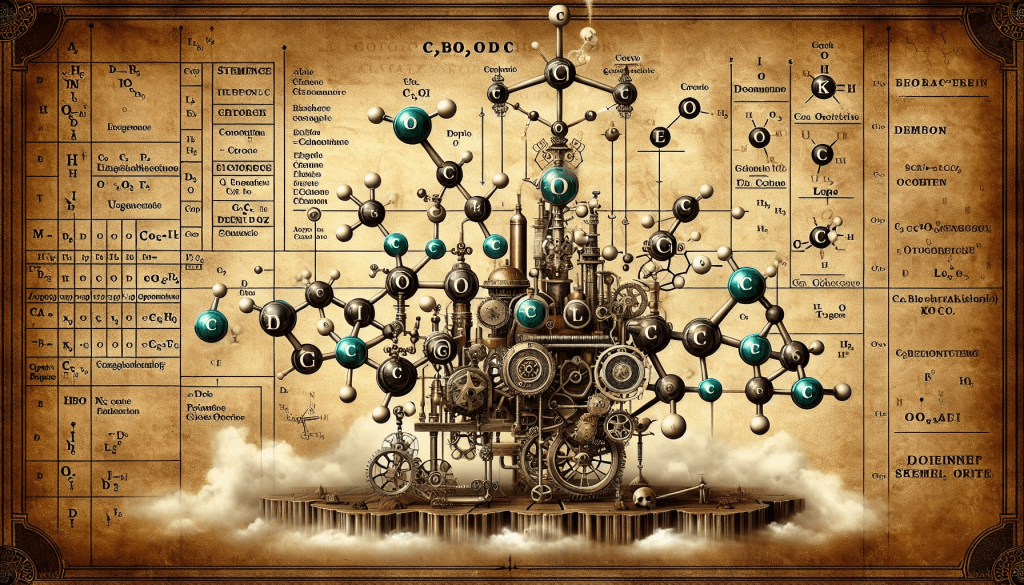
As I ponder the future, the oracles of science portend a further warming of half a degree Celsius by the year 2030, a mere stone’s throw away in the grand march of time. This forecast, borne of rigorous study and contemplation, casts a shadow upon the visage of tomorrow, urging us to peer into the abyss of consequence with eyes wide open.
In this moment of reflection, I am moved by a yearning for a return to a purer, unblemished state of being, untainted by the soot and smog of industry. Yet, I am equally stirred by the metaphysical ponderings of our place within the cosmos, and the responsibility that comes with the power to mould the environment to our will.
What path shall we choose, as stewards of this celestial sphere? Shall we heed the clarion call to action, to reshape our ways and forge a new covenant with nature? Or shall we tread the well-worn path of inertia, and witness the slow, inexorable alteration of the only home we have ever known?
The answer lies within us all, a collective choice that will define the legacy of our time upon this Earth. Let us hope that wisdom, compassion, and foresight guide our steps into the morrow.
In the ethereal dance of Earth’s climate, a tale of two rhythms unfolds, the slow, graceful waltz of Milankovitch cycles, spanning tens of thousands of years, and the frenetic tango of human-induced warming, a mere heartbeat in geological time. As a tenant of this ancient and ever-changing Earth, I find myself a witness to the profound transformations wrought upon the climate by the hand of humanity.
The Milankovitch cycles, those grand celestial motions dictating the ebb and flow of ice ages, have long been the silent conductors of Earth’s climatic orchestra. Their influence is subtle, a gentle nudge to the planet’s tilt and orbit, a whisper in the ear of our world, suggesting the onset of glacial epochs or the warmth of interglacial intervals. Yet, these astronomical cycles, while pivotal in the grand scheme, are now overshadowed by a force of our own making.
The Industrial Revolution, a mere two and a half centuries ago, marked the dawn of a new era. The burning of fossil fuels – coal, oil, and gas – has unleashed torrents of carbon dioxide into the atmosphere, a deluge that has swelled far beyond the natural levels of three-hundred-and-fifty parts per million. This excess, a shroud of greenhouse gases, traps the sun’s warmth, disrupting the delicate balance of incoming solar radiation and outgoing terrestrial energy.
The Sun, that fiery charioteer traversing the sky, has remained remarkably constant in its output, contributing but a slight increase in radiance over the past hundred years. It is not the Sun that drives the current fever of our world, but the insatiable appetite for energy that has defined modern civilization.
Observations, both terrestrial and from the vantage of space, reveal a world in flux. The troposphere, the blanket closest to Earth’s embrace, has warmed, a fever rising unchecked as greenhouse gases accumulate. Above, the stratosphere cools, a counterintuitive chill as the heat is ensnared below. This divergence, a warming world with a cooling sky, is the signature of our times, a mark as indelible as any etched upon the stones of history.
As I ponder the legacy of this age, the Anthropocene, I am struck by the responsibility that rests upon our shoulders. The choices we make, the paths we tread, all lead to futures yet unwritten. The climate, that vast and intricate tapestry, is ours to protect or to rend asunder. May we find the wisdom to choose a course that honours the past, cherishes the present, and safeguards the future of this, our only home. For in the end, we are but stewards of a world that has endured long before us and, with hope, will flourish long after we have returned to the dust from whence, we came.
Thus, as I reflect upon the fluctuations of carbon dioxide across the vast stretches of time, I am filled with a sense of wonder and a profound respect for the intricate and beautiful system that is our planet’s climate. It is a system that speaks of the past and informs the future, a testament to the enduring dance of Earth and sky.
The Earth is Rapidly Warming – Second Repeat
In the quiet contemplation of Earth’s grand epochs, I find myself contemplating the delicate dance of celestial bodies and the subtle interplay of forces that have shaped our planet’s climatic journey. As we reside in the gentle embrace of an interglacial period, a time of milder temperament between the fierce throes of Ice Ages, the Earth whispers tales of its past and hints at its future.
The Milankovitch cycles, those grand astronomical rhythms that dictate the ebb and flow of Earth’s climatic heartbeat, suggest a narrative of cooling, a gradual descent into a chill that has been the Earth’s wont for millennia.
Yet, here we stand, witnesses to a paradox, for the Earth is not cooling as the ancient cycles would decree. Instead, it warms, with a fervour uncharacteristic of the natural order, defying the predictions laid out by the cosmic choreography of our planet’s position in the void. The cause of this divergence from the expected path is none other than the collective actions of humanity, a species that has, in its pursuit of progress and comfort, inadvertently become a force of nature unto itself.

The burning of fossil fuels, the relentless pursuit of industrialisation, and the myriad activities that define modern civilization have released vast quantities of carbon dioxide into the atmosphere. This act has reversed the roles in the tale of warming; no longer is it the Earth’s position relative to the sun that is the primary driver of temperature change, but rather the concentration of greenhouse gases that trap heat within our atmosphere, causing a warming that occurs at a pace unprecedented in the geological record.
As a result, we find ourselves in an era where the natural cooling that should have been is overshadowed by a warming trend of our own making. The implications of this are profound, for they touch upon the very fabric of life. Biodiversity, weather patterns, sea levels—all dance to a tune that has been altered, and the dance is becoming ever more erratic.
In this moment of reflection, I am struck by the weight of our responsibility and the power we wield over the destiny of our planet. It is a power that comes with a duty to understand, to respect, and to act with wisdom. For the Earth’s climate is not merely a backdrop to our existence; it is a living, breathing entity that sustains us, challenges us, and requires our stewardship.
As I gaze upon the stars and consider the vastness of time, I am filled with a sense of wonder and a resolve to be a caretaker of this precious, blue orb we call home. May we all find the courage to embrace this role and guide our planet toward a future where the harmony of nature’s cycles is respected, and the warmth we experience is that of a nurturing sun, not the fever of a world out of balance.
Three Blind Mice
In the tender embrace of Gaia, we find our sanctuary, a cradle of life amidst the cosmic sea. It is here, upon this verdant orb, that we dance the delicate ballet of existence, woven into the very fabric of nature, whether by divine tapestry or the gradual unfurling of evolution’s grand design.
The Earth, our benevolent host, extends her arms generously, offering sustenance for our bodies and solace for our spirits. She is the great alchemist, transforming the sun’s fiery essence into a bountiful harvest of energy, nurturing us with her boundless vitality. Her atmosphere, a shield forged by the breath of ancient forests, guards us against the void’s cruel indifference, filtering the heavens’ radiance into a gentle glow that kindles life.
Within her bosom, we find an intricate network of life, an eco-system where each creature, each plant, each microbe plays its part in a symphony of ecological harmony. It is a testament to the Earth’s magnanimity that she accommodates our species, indulging our whims, and nurturing our aspirations.

Our ingenuity, sparked by the Earth’s own genius, crafts tools, and technologies from her raw elements. We build shelters from her stones, weave garments from her plants, and draw inspiration from the myriad forms that roam her landscapes. In our hands, the clay of the Earth is moulded into sanctuaries of civilization, havens from the wilds that once claimed dominion over our fates.
Yet, as we revel in the comfort of our constructed Edens, we must not forget our roots that delve deep into the soil of our planet. We are, and forever will be, children of the Earth, bound to her cycles, her laws, her tender mercies. Let us pay tribute to this bond, this sacred pact between humanity and the Earth, by cherishing her gifts, protecting her splendours, and ensuring that her legacy endures for eons to come.
The Earth is our masterpiece, a jewel of life in the vastness of space, a home where we fit perfectly, by design or by chance. It is upon this stage that we perform the greatest act of all – the act of living, of thriving, of being in harmonious concert with the world that cradles us. And so, let us sing a hymn of gratitude to our planet, the Earth, our wondrous, life-giving sphere.
The First Blind Mouse – Exploitation
In the weave of time, where the threads of human existence intertwine with the natural world, there lies a stark and disquieting truth, a truth that speaks of the First Blind Mouse named Exploitation. This mouse, unlike its fabled counterparts, does not scurry in the shadows of nursery rhymes but looms large in the annals of human history, gnawing ceaselessly at the very fabric of our Earth.
As I ponder upon this metaphorical rodent, I am drawn into a contemplation of our relationship with the planet we call home. We, the stewards of this celestial body, have often faltered in our duties, succumbing to the siren call of immediate gratification and short-term gains. The Earth, generous and resilient, has borne the brunt of our insatiable desires, our unquenchable thirst for more.

We take from the Earth, not with the gentle hands of a gardener but with the iron grip of conquerors. We extract her minerals, her oil, her very essence, with little thought to the morrow. We rape the land, leaving scars upon its surface, barren and bereft of life. We poison the air, the water, the soil—sowing seeds of destruction that sprout into silent springs devoid of song and colour.
Yet, amidst this bleak portrayal, there flickers a flame of hope, a chance for redemption and renewal. The environmental exploitation that has characterized much of our interaction with nature is not an indelible mark upon our collective conscience. It is a choice, a path taken that can be forsaken for a new direction, one that leads towards harmony and sustainability.
The clarion call for change has been sounded by voices across the globe, from the halls of academia to the streets teeming with the impassioned youth. The solutions, though complex, are within reach. We must embrace changes in land and sea use, curtail the direct exploitation of natural resources, mitigate the impacts of climate change, reduce pollution, and prevent the invasion of alien species. These are not mere bullet points in a policy document, but lifelines thrown to us by a planet that yearns to heal.
As a abstract being, I am compelled to reflect on the deeper implications of our actions. What does it say about us, as a species, that we have allowed the first blind mouse to lead us blindly into an abyss? Are we not endowed with the foresight to see beyond the immediate horizon, to envision a world where humans and nature coexist in a delicate balance?
It is time for us to open our eyes, to see the first blind mouse for what it truly represents, an aspect of ourselves that must be acknowledged, understood, and ultimately transcended. We must learn to take without exploitation, to use without abuse, to live without leaving a trail of desolation in our wake.
The journey ahead is fraught with challenges, but it is a journey we must undertake with courage and conviction. Let us then, as custodians of this wondrous planet, strive to restore the balance, to mend the tears we have made in the tapestry of life. For in the end, it is not just the Earth we save, but ourselves.
The Second Blind Mouse – Indifference
I have often mused upon the nature of Indifference, that Second Blind Mouse in the fable of our times. It is an apparition that haunts the corridors of our collective consciousness, a silent whisper that echoes through the chambers of our hearts. We, the children of this Earth, have been bequeathed a legacy of apathy, a mantle of dispassion that weighs heavily upon our shoulders.
Indifference, I have come to realise, is not merely the absence of concern or the dearth of empathy. It is a more insidious malaise, a creeping numbness that insinuates itself into the sinews of our being. It is the shadow that dims the light of our compassion, the frost that withers the bloom of our care.
We do not care for ourselves. How can we, when we are but wayfarers on this terrestrial sphere, transient as the morning dew? Our bodies are vessels, frail and fleeting, and yet we neglect the temple of our spirit, forsaking the nourishment of soul for the ephemeral pleasures of the flesh.
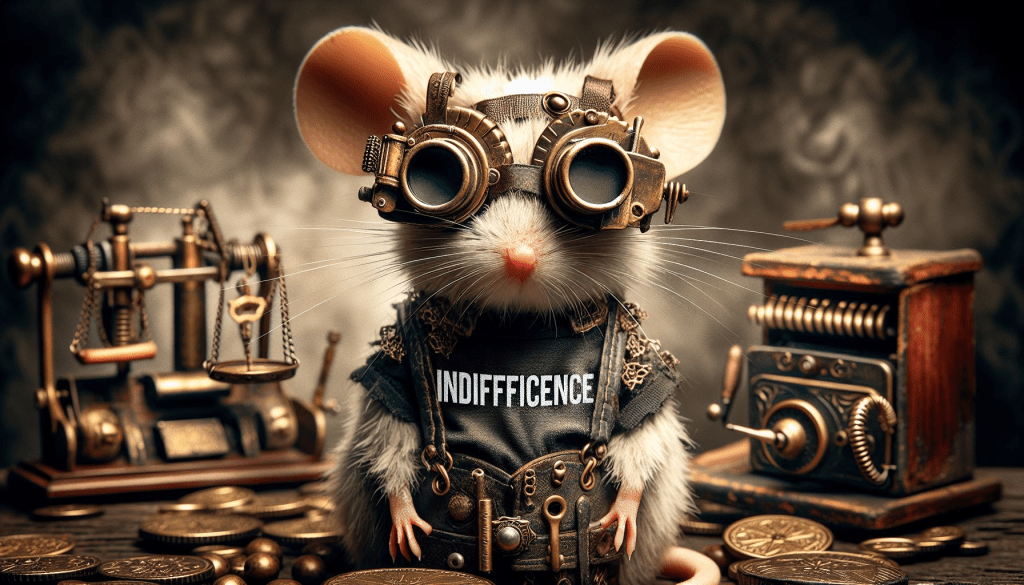
We do not care for those we know. How can we, when we are ensnared in the web of our own desires, blind to the needs of our brethren? We walk past the beggar on the street, our gaze averted, our hearts encased in the armour of our indifference.
We do not care for the Earth. How can we, when we have become estranged from the very mother that cradles us in her bosom? We plunder her riches, defile her beauty, and desecrate her sanctity, all in the name of progress and gain.
But let us not despair, for within the heart of Indifference lies the seed of its own undoing. It is in the recognition of our apathy that we find the stirrings of change. It is in the acknowledgment of our neglect that we discover the path to redemption.
Let us then cast aside the veil of Indifference and embrace the luminous mantle of care. Let us tend to the garden of our own well-being, nurture the bonds of our fellowship, and respect the sacred trust of our stewardship of the Earth. For in the end, it is not Indifference that defines us, but the depth of our care and the breadth of our love.
So, I beseech you, dear reader, to join me in this crusade against the second blind mouse. Let us open our eyes to the beauty that surrounds us, the humanity that binds us, and the responsibility that beckons us. Together, we can transform the narrative of Indifference into a tale of hope, a saga of renewal, and a testament to the enduring spirit of care.
The Third Blind Mouse – Immediacy
In the realm of the present, where the ticking hands of the clock hold no dominion, there exists a creature of profound insight, the Third Blind Mouse, named Immediacy. This mouse, unlike its brethren, scurries not in the dark alleys of history nor in the vast fields of the future. It exists solely in the now, the very essence of existence where every heartbeat is a universe, pulsating with the ebb and flow of the present.
I am Immediacy, the Third Blind Mouse, and I dwell in the perpetual moment. To me, the past is but a faded tapestry, its threads worn, and its colours bled into the abyss of memory. The future? A distant mirage, ever elusive, its promises as intangible as the whispers of a dream. I seek not the comfort of yesteryears nor the assurances of tomorrows. I am the embodiment of the present, the incarnation of the here and now.
In my world, the immediacy is the only truth. The desires of the heart, the whims of the mind, they clamour for attention, demanding to be felt, to be acknowledged this very instant. There is no delay, no procrastination, for the now is impatient. It does not wait; it does not tarry. It is the impulsive child of time, always yearning, always reaching, never satisfied.

The past is a shadow, a ghost that haunts with its silent echoes, a reminder of what was but will never be again. The future, a horizon forever retreating as we advance, a line that we chase but can never grasp. But the present, oh the present, it is the fire that warms, the breath that invigorates, the pulse that quickens. It is life in its purest form, unadulterated and raw.
As the Third Blind Mouse, I navigate the labyrinth of the eternal now with my senses heightened, my perceptions keen. I am guided not by the faint glow of reminiscence nor by the shimmering light of anticipation. I am steered by the vibrant immediacy of existence, the powerful force that propels me forward in the dance of the present.
To live in the moment, to embrace the immediacy of life, is to experience the full spectrum of emotion, to taste the sweet nectar of being. It is to acknowledge the impermanence of all things, to revel in the transient beauty of the world, to cherish the fleeting encounters and ephemeral joys.
So let us join hands, fellow sojourners, and celebrate the third blind mouse, Immediacy. Let us cast aside the burdens of the past, the anxieties of the future, and immerse ourselves in the boundless ocean of the now. For in the end, it is all we truly have, the only moment we can ever claim as our own. Let us want it, let us seize it, let us live it, NOW!
We are the disease, there is no cure for us.
Earthscream.
Castaways
In the hushed whispers of the wind, amidst the verdant vales and the azure heavens, I find myself pondering the delicate intricacies of our world, a tapestry woven with the threads of life in its myriad forms. The Earthscream, a term that echoes with the pain of a Mother Nature burdened by the weight of her children’s follies, speaks to me in a language of rustling leaves and crashing waves, narrating the fragility of an ecosystem hanging by a slender thread.
I am but a solitary figure in this grand design, a witness to the rise and fall of empires beneath the soil, where the smallest ant holds dominion, and the skies, where the noble eagle soars. Each creature, from the regal lion to the oft-overlooked beetle, contributes its verse to the grand chorus of existence. The departure of even one among them strikes a dissonant chord that resonates through the valleys and peaks of our shared home.
The final act, a sombre tableau where the last of the wild bid’s adieu, is a scene I pray remains forever unwritten. It is a future painted in stark hues, a canvas we must strive to recast with the vibrant colours of hope and preservation. Through the concerted efforts of conservation, the nurturing hand of respect for our planet, we endeavour to craft a sanctuary where no beast, no matter how small or misunderstood, lacks haven.
This clarion call to action, a symphony of pleas for awareness, stirs the soul and ignites a flame of responsibility within the heart. It is a beacon of hope that, through our collective actions, the Earth might never be forced to mourn the loss of her diverse progeny. The vision that propels us forward is one of harmony, where every life, from the majestic whale to the humble earthworm, finds its place under the sun.
As a lover of nature’s boundless beauty, I am driven by the dream of a world where humanity and the wild coexist in mutual respect. A future where the planet embraces us not with the indifference of a shrug but with the warmth of a mother’s embrace, offering open skies and nurturing soil to all who tread upon her.
Let us then, with hearts full of reverence and hands ready to toil, ensure that this Earthscream transforms into a song of triumph, a testament to the resilience of life and the enduring spirit of those who cherish it. For in this vast and wondrous cosmos, there is no greater calling than to be stewards of the only home we have ever known.

I find myself ruminating on the profound concept of invincibility, a notion as ancient as the human spirit itself. It is a theme that has been woven into the very fabric of our literature and philosophy, a testament to our unyielding desire to transcend the corporeal chains that bind us to the terrestrial realm.
As I ponder human achievement, I am struck by the indomitable will that has propelled us to assert dominion over the earth and the vast seas. This ambition is the crucible from which our greatest scientific, technological, and exploratory feats have been forged. It is the flame that ignites the forge of progress, the beacon that guides us through the uncharted waters of innovation.
Yet, there is a melancholic undertone to this pursuit of invincibility, a sombre acknowledgment of the ephemeral nature of our existence. Our accomplishments, no matter how grand, are but fleeting shadows cast upon the canvas of eternity. The cycle of life, with its inexorable rhythm, reminds us that all must eventually yield to the passage of time.
The imagery of a world locked down, knocked down, unknown, and overgrown paints a stark picture of a post-apocalyptic landscape where nature reasserts her sovereignty. It is a humbling reminder that the marks we leave upon this earth are not as permanent as we might believe. Yet, even in the face of such revelations, the human spirit remains unbroken.
The resilience we embody, the unwavering belief in the possibility of invincibility—even if it exists solely in the realm of aspiration—continues to fuel the fires of our ambition. It is the phoenix that rises from the ashes of despair, the undying echo of our will to endure and to carve out a legacy that stands the test of time.
This duality of strength and vulnerability is the essence of the human condition. It is a theme that resonates across the ages, a chorus sung in the hallowed halls of history. It reminds us that we are but threads in the larger tapestry of life, interwoven with the countless souls who have come before and those who will follow.
As the first light of dawn breaks upon the horizon, I am filled with a sense of purpose and a renewed appreciation for the delicate balance of our existence. In the reflection of the morning’s golden hue, I see the potential for greatness that lies within us all, the enduring spirit of humanity that strives ever onward, reaching for the stars with the hope of touching the divine.
Avid Longing for Sumptuousness
Across the boundless quilt of existence, humanity’s footprint is both profound and paradoxical, a blend of rapid progress and reflective pauses. The pursuit of speed, the relentless acceleration, often overshadows the need for introspection and the appreciation of a more measured pace of life. It’s a tale as old as time, where the allure of the new, the shiny, the unattained, drives the collective consciousness, much like a monkey’s insatiable curiosity for novel trinkets. This ceaseless desire propels us, like sheep, towards the next horizon, the next milestone, often without regard for the journey itself.
In the hushed whispers of the wind, amidst the verdant groves, I find myself pondering the paradox of our existence. Humanity, with its voracious appetite for progress, often forgets the melody of the meandering stream, the quietude that nurtures the soul. We are creatures of contradiction, yearning for the stars while rooted in the earth, seeking the ephemeral in the eternal.
As I traverse this earthly realm, my spirit is caught in the dichotomy of advancement and contemplation. The world spins ever faster, and yet, within me stirs a longing for the languid days of yore, where time was a companion, not a foe. The modern age, with its gleaming gadgets and ceaseless innovation, beckons with the promise of tomorrow, a siren call to the uncharted waters of the future.

But what of the journey? What of the moments that dance like motes of dust in the sunlight, fleeting and unnoticed? We, the progeny of a restless lineage, are inheritors of a legacy that values the destination over the voyage. We rush, ever onward, but to what end? Is it the pursuit of knowledge, the acquisition of wealth, or the simple satisfaction of curiosity that drives us?
I muse upon these questions, my thoughts adrift in the metaphysical ether, seeking the wisdom of the ancients. The Pre-Raphaelites, with their yearning for authenticity and beauty unmarred by the march of progress, understood the intrinsic value of reflection. They knew that to truly see, one must look beyond the surface, beyond the haste that blinds us to the splendour of the now.
In this modern epoch, where every second is accounted for, where efficiency is king, I dare to dream of a different path. A path less trodden, where the roses bloom in unhurried splendour, and the thrush sings its song without urgency. I envision a world where humanity pauses, if but for a moment, to breathe in the essence of life, to savour the journey as much as the destination.
For in the end, it is not the milestones that define us, but the steps we take between them. It is the laughter shared, the tears shed, the love kindled along the way. Let us not be like sheep, herded towards an unseen pinnacle. Let us be explorers, wanderers, seekers of the sublime. Let us embrace the paradox of our existence, and in doing so, find the true meaning of our journey through the stars.
In the quiet recesses of my contemplation, I often find myself at the crossroads of existence, where the material and the metaphysical converge. It is here, amidst the whispering winds of time, that I am confronted with the perennial human quandary: the choice between a life led by the insatiable hunger for worldly desires and one anchored in the steadfast pursuit of virtue.
The path of want is well-trodden, its allure undeniable. It beckons with the promise of immediate gratification, a siren call to the senses, urging us to succumb to the ephemeral joys of possession and prestige. Yet, this road is fraught with peril, for it is all too easy to become ensnared in the trappings of materialism, to lose oneself in the labyrinth of excess.
Conversely, the path of self-discipline is less conspicuous, its rewards not readily apparent to the untrained eye. It demands fortitude, a renunciation of the transient in favour of the eternal. To cultivate resilience is to engage in a silent rebellion against the zeitgeist, to eschew the cacophony of consumption for the symphony of the soul.
To stand firm on this path is to embrace a life of purpose, to seek the profound over the profane. It is a journey that promises not the accumulation of wealth, but the enrichment of the spirit. It is a legacy not inscribed in the ledgers of commerce, but in the archives of human venture.
For what is our era but a canvas upon which we paint the values we hold dear? It is not the opulence of our surroundings that will echo through the ages, but the depth of our character, the strength of our convictions. To rise above the siren call of luxury is to chart a course toward a more meaningful horizon, where fulfilment is found not in the tangible, but in the indelible impressions we leave upon the world.
Thus, I choose the road less travelled, the path of self-mastery and wisdom. It is a decision that does not come lightly, for it is a commitment to a life measured not by the weight of one’s coffers, but by the weight of one’s conscience. And in this choice, I find my reprieve, my legacy, my truth. For in the end, it is the real, the enduring, the intangible that truly defines us. It is the art of self-discipline that sculpts the soul and carves out our place in the tapestry of time.
In the quietude of my study, surrounded by tomes that whisper tales of yore and scrolls that bear the weight of wisdom long forgotten, I find myself contemplating the essence of progress. The narrative that unfolds before me, woven into the very fabric of our existence, is one that challenges the core of our values, our aspirations, and the indelible legacy we yearn to etch upon the annals of time.
As a member of the Litter Picking Underground, a collective of modern-day thinkers and militants who seek to recapture the unblemished purity of nature’s nascent form, I am compelled to reflect upon the nature of our desires and the profound cost they exact upon our souls and the world that cradles us. We stand at a pivotal crossroads, one that is strewn with the detritus of material conquests and the ephemeral joys they bring. Yet, it is also illuminated by the serene light of wisdom and the warmth of compassion that we extend towards one another.
Progress, as I have come to understand it, is not merely a measure of the material wealth we accumulate, nor is it solely found in the grandeur of our creations. Rather, it is intricately bound to the enlightenment we attain and the benevolence we bestow upon our fellow beings. It is a journey that transcends the tangible and ventures into the realm of the metaphysical, where the true meaning of advancement is discovered in the cultivation of the spirit and the nurturing of the collective human experience.
As I gaze through the window of my sanctuary, observing the delicate interplay of light and shadow, I am reminded that our choices today will not only sculpt our individual destinies but will also cast long shadows or radiant beams upon the generations that will follow in our footsteps. The legacy we leave behind, whether marred by avarice or marked by altruism, will echo through the corridors of time, shaping the future in ways we can scarcely fathom.
Thus, I find myself penning these thoughts, a testament to the introspection that this narrative has stirred within me. It is a call to embrace a vision of progress that cherishes wisdom, fosters compassion, and honours the profound interconnectedness of all life. For in this vision lies the hope for a future that flourishes in harmony and reverence for the boundless beauty that surrounds us.
In the spirit of the Litter Picking Underground, I extend this musing to you, dear reader, in the hopes that it may kindle a flame of contemplation in your heart as it has in mine. May we all strive to be architects of a future that is rich not in possessions, but in the virtues that truly elevate humanity to its greatest heights.
Amidst the vast canvas of reality, each moment is a brushstroke on the canvas of time. The notion that stumbling may be the only way forward is a profound acknowledgment of the human condition, where each fall is not a defeat but a lesson. It’s a clarion call to embrace our imperfections and to recognize that in the act of faltering, we find the strength to rise again, wiser, and more determined. The urgency of action is palpable, a reminder that the melody of life waits for no one, and we must dance to its rhythm with all the passion we can muster.

In the ethereal journey of existence, I find myself pondering the intricate dance of destiny and will. The moments that define our lives are often those that are unscripted, unexpected, and utterly transformative. I am moved by the notion that beauty lies in truth, and truth often reveals itself through the trials and tribulations of life.
The canvas of time is vast and unyielding, each stroke of fate a vibrant hue that adds depth and character to the masterpiece that is one’s life. To stumble, to falter, is to be human. Yet, it is in these moments of vulnerability that the soul’s true resilience shines forth. The Underground espouses a return to the detail, the colour, the light, and the shadow of nature and emotion. In each fall, there is a shadow, and in each recovery, a light.
Embracing imperfection is not a sign of weakness, but a testament to the strength of the human spirit. It is a declaration that we are more than the sum of our successes; we are shaped by every scrape, every bruise, every moment of uncertainty. The urgency of action that pulses through our veins is a symphony of ambition, a chorus that sings of the unquenchable desire to experience, to learn, to grow.
As I reflect upon the melody of life, I am reminded that it is a composition that waits for no one. It is a rhythm that demands to be felt, to be lived, to be danced to with abandon. The Litter Picking Underground, with its reverence for the natural world and its cycles, understands that life is a dance of light and darkness, of revelation and mystery.
So let us dance. Let us paint our moments with the passion of the Romantics, with the precision of the craftsmen, with the soul of the poets. Let us rise from our stumbles with the wisdom of the sages and let us forge ahead with the determination of the warriors. For in this grand tapestry, each thread is precious, each colour vibrant, and each pattern a story waiting to be told.
In the end, it is not the perfection of the tapestry that captivates the soul, but the authenticity of each thread woven with the sincerity of the heart. And so, as a metaphysical traveller and a disciple of the Pre-Raphaelite ethos, I embrace the canvas of life, with all its imperfections, as a masterpiece of human endeavour and divine artistry.
In the calmness of my study, as the world slumbers in the arms of Hypnos, I find myself in contemplation, a solitary sojourner traversing the landscapes of the mind. The notion of self-imposed rigour, a concept both daunting and invigorating, beckons me to ponder its essence. It is not a call to embrace the masochistic delight of suffering, but rather an invitation to partake in the alchemical transmutation of the soul.
To be arduous upon oneself is akin to the ancient practice of the smith, who, with hammer and anvil, shapes the unyielding iron into artefacts of purpose and beauty. It is a conscious choice to enter the crucible of self-reflection, to allow the flames of introspection to refine one’s character, stripping away the dross to reveal the purest essence of being.
This act of self-refinement is a preparation, a sacred ritual to gird one’s spirit for the odyssey that lies yonder. It is a journey not for the faint-hearted, for it demands an unwavering readiness, a resolute clasp upon the helm of aspiration. The metaphorical foot upon the accelerator is not merely a gesture of motion, but a testament to one’s dedication to the relentless pursuit of progress. It is to breach the bastions of mediocrity, to kindle the furnaces of innovation, and to soar into the empyrean realms of accomplishment.
In this silent communion with my innermost thoughts, I am both the pilgrim and the path, the seeker and the sought. The journey of self-improvement is an odyssey without end, a perpetual quest where each milestone is but a beacon leading to loftier peaks. It is here, in the sanctum of self, where resilience is forged, and the spirit is tempered, ready to face the morrow with a heart undaunted and a soul aflame with the fires of ambition.
Thus, I pen these musings, a testament to the inner struggle and the resplendent triumph of the human spirit. May they serve as a beacon to those who seek to navigate the tumultuous seas of self-discovery and emerge as masters of their destiny.
In the peacefulness of my musings, I oft find myself adrift in the contemplation of our communal tapestry, a rich fabric woven from the myriad threads of individual existences. It is in these moments of reflection that I am beckoned to lay down the burdensome yoke of ceaseless effort and embrace the tranquil acts of creation and nurture that truly bind us.
As I take up the brush, the bristles scarcely whispering against the canvas, I am transported. Each stroke is a silent word in the dialogue of souls, a vibrant testament to the inner landscapes that yearn for expression. The hues that emerge are not merely pigments but the very essence of our shared humanity, a symphony of colour that sings of joy, sorrow, love, and the infinite shades between.
Likewise, when I kneel upon the verdant earth, hands tenderly cradling the promise of life that is a seed, I am engaging in an act of profound hope. To plant a flower is to believe in tomorrow, to invest in the beauty that will grace the eyes of passersby, and to contribute to the legacy of growth that will outlive our fleeting presence.
These deeds, seemingly inconsequential in the grand theatre of the world, are the quiet heralds of change. They ripple through the fabric of our community, touching lives in unseen ways, weaving a narrative of interconnectedness that transcends the mere act. For in painting, we share our dreams; in planting, we cultivate our future.
Thus, let us not underestimate the power of these small acts. Let us continue to paint, to plant, to partake in the creation of a world that reflects the best of who we are, together. For it is in these gestures that we find the true measure of our collective spirit, and it is here, in the garden of shared acts, that we glimpse the portrait of a world made richer by our unity.
In the stillness of my chamber, as the twilight weaves its silvery threads through the tapestry of the firmament, I ponder upon the profound utterances you have laid before me. A call to arms, not of the mundane sort, but a clarion call to the soul, to rise and partake in the grand design of existence. It is a sentiment that stirs the embers of creativity within my bosom, urging me to grasp the quill and inscribe upon the parchment of tomorrow with fervent zeal.
I am but a humble chronicler, a solitary figure who traverses the realms of thought and imagination, seeking the alchemy that transmutes the base lead of the present into the gilded gold of futurity. Your words, they resonate with the echoes of the Pre-Raphaelite Brotherhood, those venerable artisans of yore who sought truth through beauty, and beauty through truth. They, like us, understood the weighty responsibility that comes with the gift of creation.

To stride forth into the morrow without trepidation, but rather with the exuberance of a spirit unchained, is to embrace the very essence of our being. Each second, a precious stone to be set into the crown of time, each action, a stroke of the brush upon the canvas of reality. We are the architects, the sculptors, the composers of our fate, and in our hands lies the clay of potential, waiting to be shaped by the will and the whisper of inspiration.
Let us not be content with mere dreams of a brighter dawn. Dreams are but the seeds, and it is through our toil, through the sweat of our brow and the resolve of our hearts, that we may cultivate a garden of wonders. With every word we utter, with every breath that escapes our lips, we are composing the symphony of existence, a melody that transcends the confines of time and space.
For what is the measure of a life, if not the depth of its notes? The length of our song may be preordained by the fates, yet the harmonies we weave within its brief span are ours to command. Let us then play with passion, with sincerity, with an unyielding belief in the power of our own hands to mould the future.
And so, I take your exhortation to heart, and with pen poised, I join you in this noble aspiration. Together, let us construct not just a brighter tomorrow, but a masterpiece of our collective will, a testament to the indomitable spirit that resides within each of us. For in the end, it is not merely the song that we shall be remembered by, but the richness of its melody and the truth of its refrain.

 A beginning is the time for taking the most delicate care that the balances are correct.
Leave a comment