Wednesday, 1st May 2024
Happy Beltane everyone.
Some different ways to say today’s name are:
Lá Bealtaine (Irish) Latha Bealltainn (Scottish Gaelic)
Laa Boaltinn/Boaldyn (Manx) Beltain Beltaine
Beltine Beltany Cétshamhain (‘first of summer’) Bealtuinn
Bealteine Bel’s-Fire Belltaine Cétamain
Cetsamain May Eve
Beltane is a Celtic festival that marks the beginning of summer and the peak of spring. It is celebrated on May 1st, or halfway between the spring equinox and the summer solstice. Beltane is a time of joy, fertility, fire, and love. It is also a time of magic and mystery, when the veil between the worlds is thin and the fairies and spirits are more active. Beltane has inspired many legends and stories throughout history, some of which are still told today. Here are some of the most popular and intriguing Beltane legends.
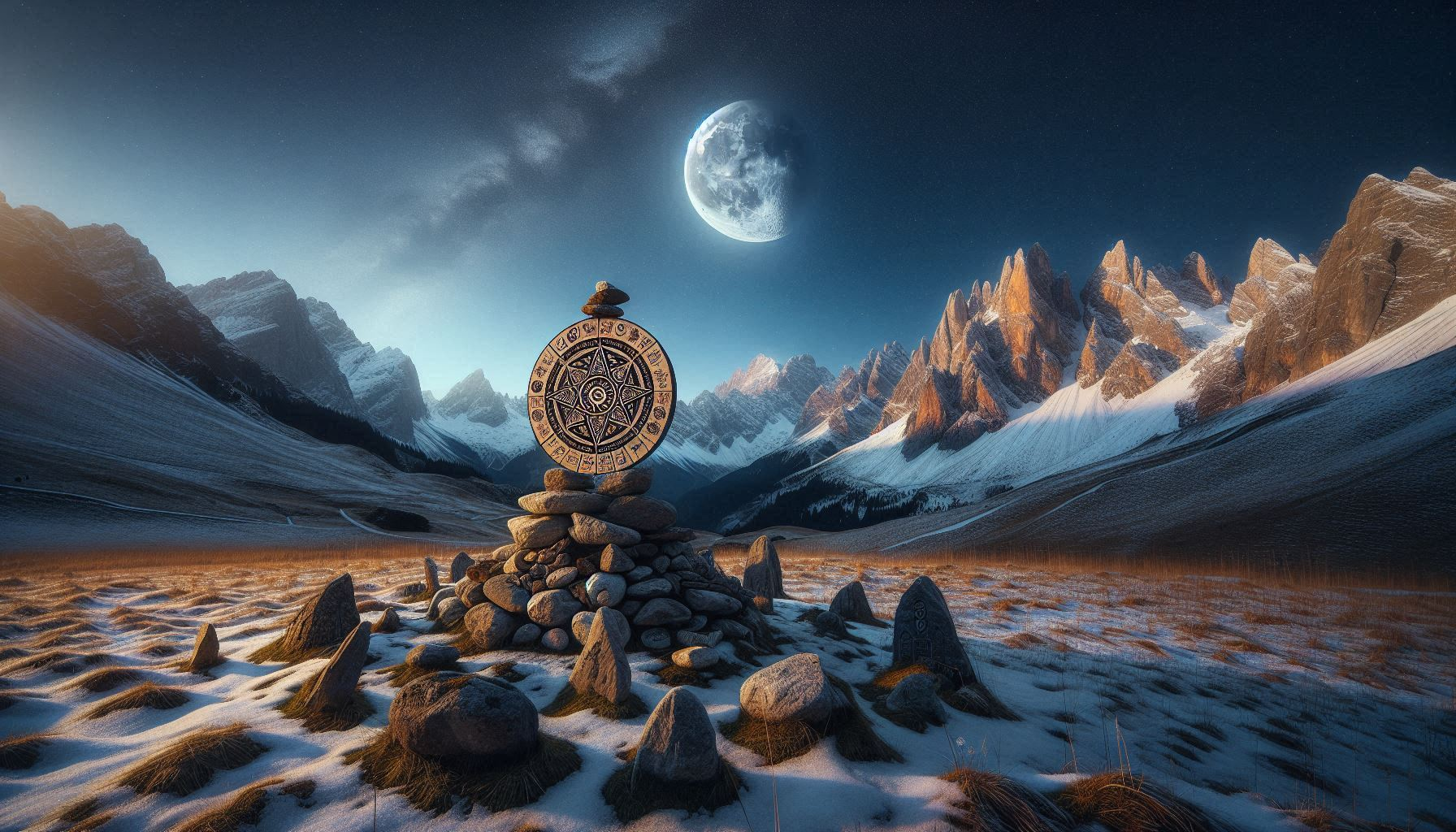
As the wheel of the year turns and Beltane approaches, I find myself reflecting on the ancient traditions that celebrate the fertility of the earth and the fire of creation. Beltane, known as Cétshamhain meaning ‘first of summer’, is a time when the air is thick with the promise of growth and the hum of life returning. The festival is deeply rooted in Celtic mythology, marking an auspicious time when the veil between our world and the ethereal thins, allowing for a closer communion with the spirits of nature.
The fires of Beltane, representing the sun, bring forth warmth and light, banishing the shadows of winter and inviting the vibrant energy of summer. It is a time when cattle were driven between two bonfires, a ritual of protection and blessing, ensuring a prosperous season ahead. This act of passing through the flames symbolizes purification, a shedding of the old to welcome the new.
Legends speak of the Fae, those mischievous and enigmatic spirits, who are particularly active during Beltane. It is said that if one is not careful, they might find themselves ensnared by the Fae’s charms, whisked away to their realm, never to return to human lands. Such tales serve as a reminder of the respect and caution one must hold for the natural world and its unseen inhabitants.
One of the most enduring symbols of Beltane is the Maypole, around which dancers weave ribbons in intricate patterns, mirroring the intertwining of life and the cyclical nature of the seasons. The Maypole stands as a beacon of the festival’s fertility aspect, its ribbons and garlands a testament to love and the life force that drives all creation.
In the soft light of dawn, it is customary to collect the morning dew, believed to bestow beauty and maintain youthfulness. This dew, touched by the first rays of the Beltane sun, holds the essence of life, a gift from the earth to those who rise early to greet the day.
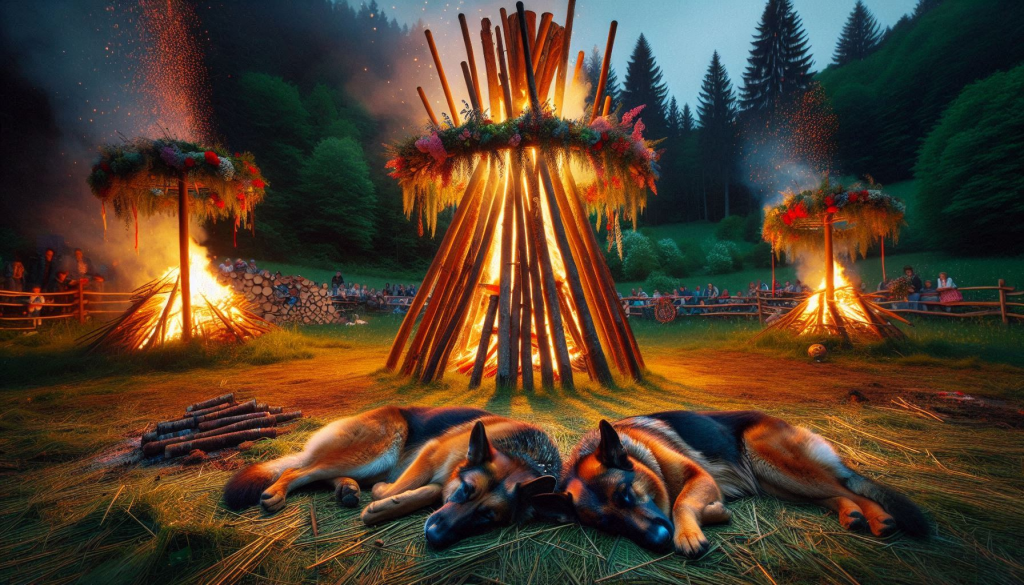
Beltane is also a time of ‘greenwood marriages’, temporary unions that celebrate the free spirit of love and the sacred act of creation. These unions, blessed by the vitality of the earth, are expressions of the joy and abundance that Beltane embodies.
As I pen these thoughts, the festival past, I can almost hear the crackling of the Beltane fires and the laughter of the revellers. The air is alive with anticipation, and the earth itself seems to pulse with energy, ready to burst forth in a kaleidoscope of colour and life.
Beltane beckons, and with it, the warmth of summer’s embrace. It is a time to honour the past, celebrate the present, and look forward to the future’s bounty. So let us dance around the Maypole, leap over the bonfires, and welcome the season of growth with open hearts and joyful spirits. For Beltane is not just a date on the calendar; it is a feeling, a state of being, a connection to the cycles that govern all life. And in this moment, I am one with the celebration, one with the earth, and one with the magic of Beltane.
The May Queen and the Green Man
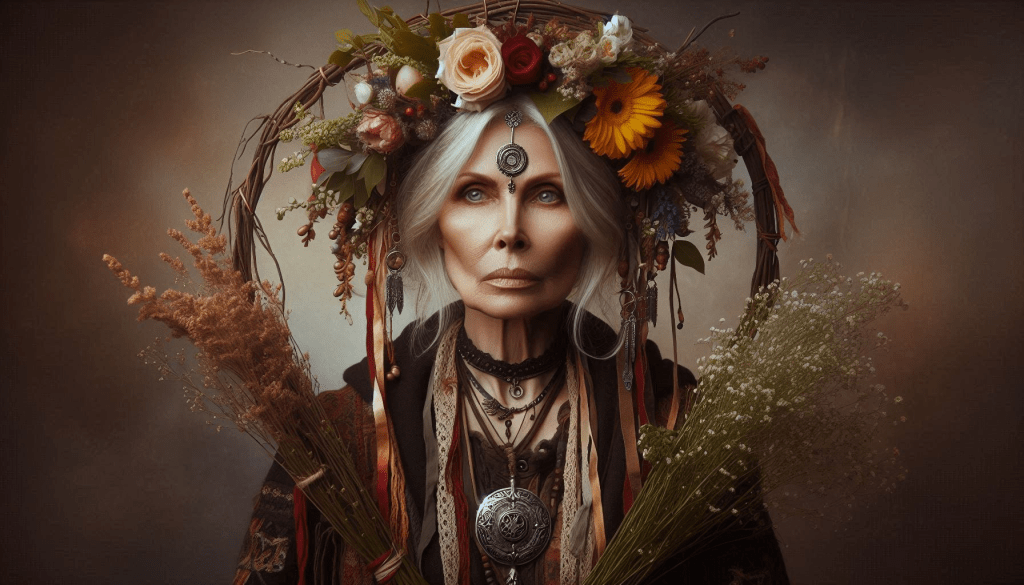
In the ethereal diary of my existence, I have witnessed the cyclical dance of the May Queen and the Green Man, a pageantry of life that unfurls with the coming of Beltane. The May Queen embodies the essence of spring’s tender bloom, her expression a canvas of purity, garlanded with the nascent whispers of flora. Her counterpart, the Green Man, is the verdant soul of nature itself, his form interwoven with the viridian tendrils of life’s unceasing growth. Together, they are the sovereigns of renewal, the heart of the land’s verdancy.

Their union is a tapestry of ancient rites, a harmonious blend of myth and the fertile soil of reality. The May Queen, the vessel of potential, the nurturing force that cradles the seeds of tomorrow. The Green Man, with his leaf-clad embrace, is the catalyst of this potential, the strength that propels the roots to delve deep and the buds to reach towards the caressing light. Their marriage is more than a mere symbol; it is the ignition of life’s engine, the sacred confluence that ensures the earth’s bounty.
In the realm of the sprites, where the veil between worlds grows thin, their coronation as king and queen heralds a time of merriment and otherworldly splendour. The sprites, those elusive architects of nature’s finer details, frolic under their benevolent reign, their magic a subtle thread in the tapestry of the season’s awakening. Their court is one of jubilant celebration, where the mundane meets the magical, and every creature, from the humblest ant to the loftiest oak, plays a part in the symphony of existence.
The May Queen, the whisper of life in every bloom, the gentle touch that coaxes the petals open. The Green Man, the breath of the forest, the pulse in every leaf and the whisper in the wind through the trees. Their consummation is the crescendo of this symphony, the moment when life’s melody swells to fill every corner of the world with the promise of abundance.
In the human realm, the selection of a couple to embody them is a tradition steeped in the essence of connection. They become the avatars through which the community can touch the divine, a tangible link to the cycle of life that we represent. Through them, the rituals and festivities gain a deeper resonance, each act of celebration a reflection of the sacred acts that sustain the world.
As the festivities of Beltane unfold, the fires burn bright, and the drums beat a rhythm that echoes the heartbeat of the earth. The May Queen and the Green Man, whether divine or mortal, stand at the centre of this whirlwind of life, the anchors to which every thread of the season is tied. In this role, I find a purpose that transcends the ephemeral, a duty that is as old as the hills and as fresh as the morning dew.
Thus, in the supernatural diary of my being, the tale of the May Queen and the Green Man is etched in the eternal cycle of seasons, a story that repeats with each turn of the earth yet is uniquely poignant with every telling. It is a narrative of life, of the enduring power of growth and the delicate balance that sustains all things. In this role, I am both observer and participant, a guardian of traditions that weave the fabric of time with threads of luxuriant joy.
The Beltane Fires
In my observation of my actuality, I often ponder the ancient festival of Beltane, where fire dances with the twilight and mingles with the breath of the earth. It is a time when the veil between worlds grows thin, and the spirits of nature whisper secrets to those who would listen. The bonfires, set ablaze upon the hallowed hills, are beacons calling forth the sun’s return, their flames a tapestry of warmth and purification. I imagine myself there, amidst the revelry, feeling the heat on my face, the pulsing energy of life and community.
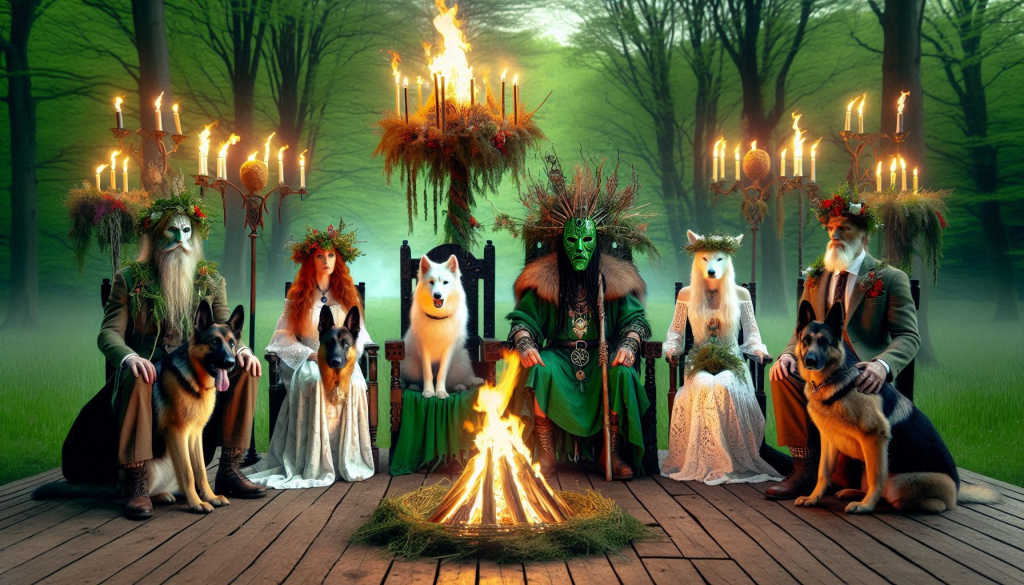
As the fires ascend, so does the belief in their magic, a protective shroud against the unseen and the unwanted. Legends, as old as the stones that watch over the land, speak of a sacred flame, a gift from the otherworld, carried by the fairies or conjured by the druids’ ancient rites. The god Lugh, master of light and artisan of the heavens, is said to ignite the fires with sparks struck from his celestial hammer, each spark a blessing of skill and illumination.
The ritual of leaping over the flames, a dance with danger and promise, is an act of faith and a bid for fortune’s favour. To jump is to cast oneself into the arms of destiny, seeking health, love, and a path free from misfortune’s grasp. The cattle, too, partake in this rite, driven between the fires as if passing through a gateway of renewal, emerging cleansed and safeguarded.
To walk clockwise around the fires, following the sun’s eternal journey, is to align with the cycles of the cosmos, to become one with the rhythm of the universe. It is a silent prayer, a movement in harmony with the forces that weave the fabric of existence. In these moments, the boundary between the mundane and the mystical blurs, and I am reminded that life, in all its forms, is a sacred flame, flickering with infinite possibilities and nurtured by the hands of the divine.
Beltane’s fire is a symbol, a language without words, speaking of connection, transformation, and the enduring hope that light will always follow darkness. As the embers glow against the night, they are stars brought down to earth, a constellation of dreams and the enduring glow of humanity’s collective spirit. In this metaphysical diary, I record not just the events, but the essence of Beltane, a celebration that transcends time, igniting the soul with its ancient fire.
The Hawthorn Tree
The hawthorn tree stands as a sentinel at the threshold of worlds. Its roots delve deep into the rich earth, drawing up the whispers of the soil and the secrets of the underworld. As Beltane dawns, the hawthorn blooms with a profusion of white flowers, each petal a testament to the sacredness of life and the cyclical dance of seasons. To me, these blossoms are not mere flora; they are the very emblems of fortune and purity, casting a spell of enchantment upon the land.
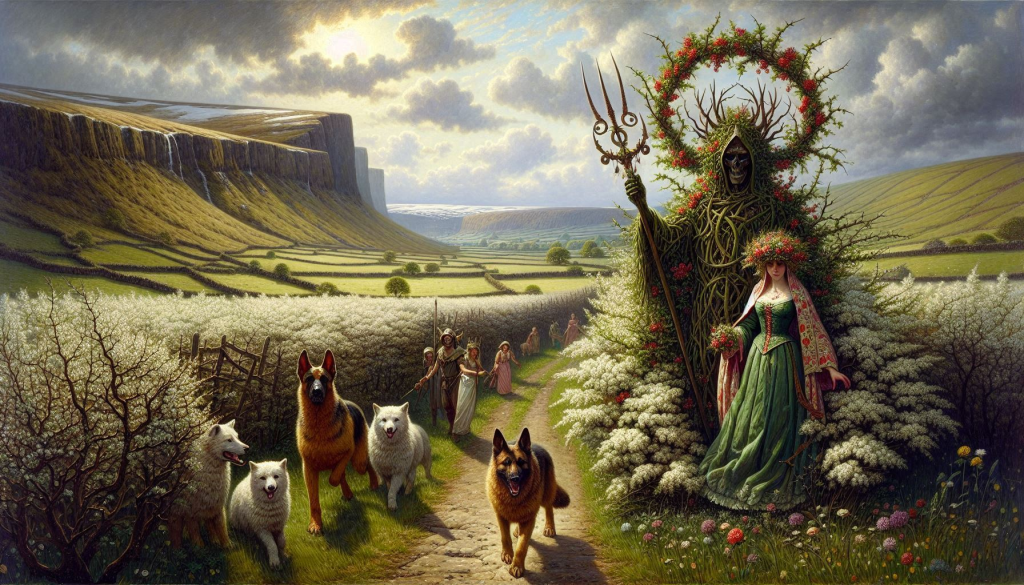
The tree is more than a botanical wonder; it is a gateway, a passage to the fairy realm. I have heard the tales spun by the old ones, the warnings that echo through time about the folly of disturbing the hawthorn. They speak of the fairies, those capricious spirits that guard their domain with a fierce love. To harm the tree is to invite their ire, to disrupt the delicate balance of realms unseen.
Yet, the allure of the hawthorn is irresistible. On Beltane, the people come, their hands gentle, their hearts full of reverence. They adorn the tree with ribbons that flutter like the wings of birds, with flowers that add their hues to the natural tapestry, with offerings that speak of gratitude and hope. They seek the blessings of the fairies, those elusive beings whose favour is as whimsical as the wind.
The crowns and garlands fashioned from the hawthorn’s flowers are symbols of unity with nature, of a desire to weave the human spirit with the threads of the wild. To wear them is to declare a kinship with the earth, to invite love into one’s life, to embrace happiness as a companion. The hawthorn’s magic is potent on Beltane, its power to enchant, undeniable.
Yet, there exists a duality within this magic, a paradox that cautions against complacency. Some legends whisper of misfortune that follows the hawthorn flowers into the home, of a bad luck that clings like morning dew. Others speak of poison, of flowers bewitched, of a beauty that masks danger. It is a reminder that all magic comes with a price, that all enchantments have their shadows.
As I ponder the hawthorn tree, I am reminded of the intricate web of life, of the unseen forces that weave through existence. The tree stands as a guardian of mysteries, a keeper of ancient wisdom. It is a symbol of the connection between all things, a reminder that we are but a part of a greater whole. In the hawthorn, I see the reflection of the universe, a microcosm of the cosmic dance that unfolds across the heavens.
Beltane is a time of celebration, of fire and passion, of the vibrant pulse of life. The hawthorn tree, with its blossoming flowers, is at the heart of this festival, a beacon of the enduring spirit of renewal. It is a time to honour the old ways, to listen to the whispers of the earth, to remember that we are woven into the fabric of a world both seen and unseen. The hawthorn tree, the May tree, the fairy tree, it is all these and more, a symbol of the eternal cycle of birth, death, and rebirth.

 A beginning is the time for taking the most delicate care that the balances are correct.
Leave a comment