Tuesday, 13th August 2024
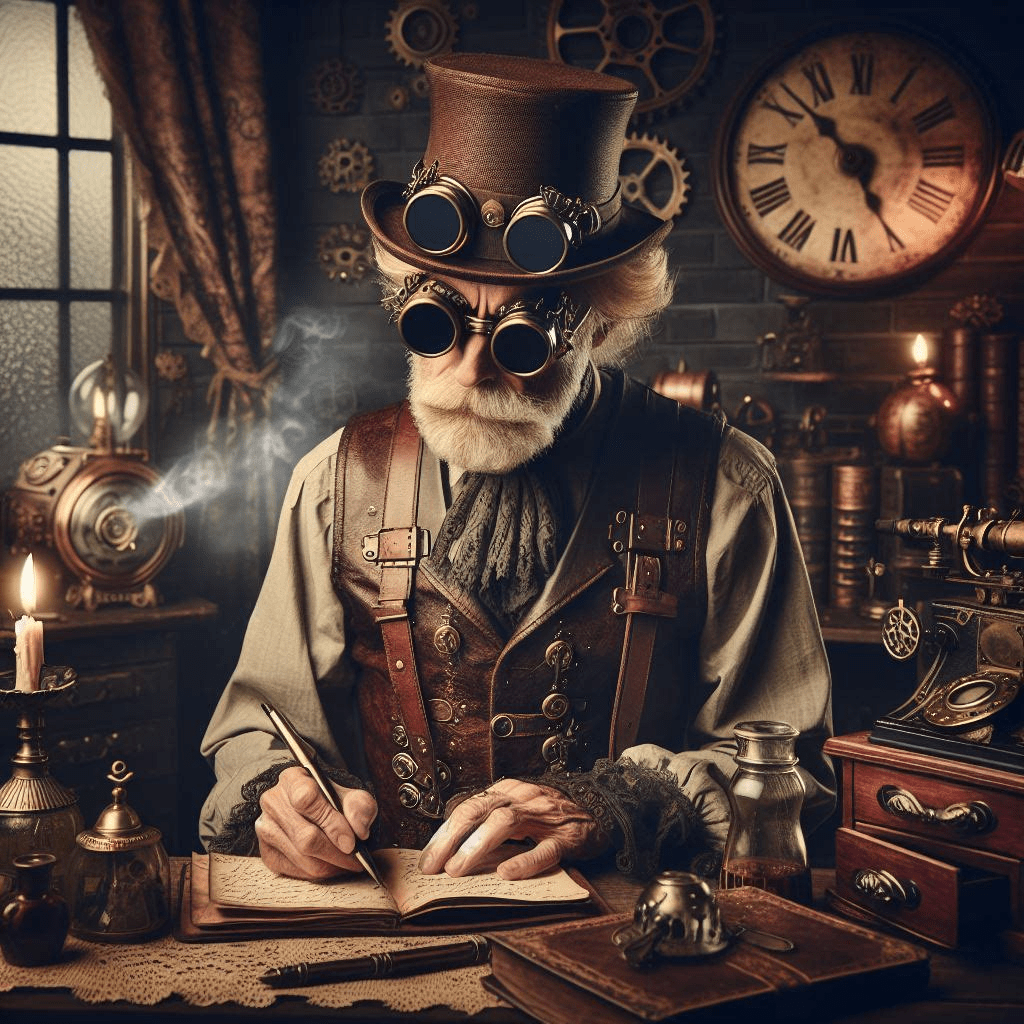
In the dim glow of my study, surrounded by tomes of ancient wisdom and the pervasive scent of burning oil, I pen these words with a fervent desire to impart the fruits of my ceaseless inquiries. It is a truth universally acknowledged that the acquisition of knowledge is akin to the drawing of water from a deep well; laborious yet rewarding. To possess such knowledge is a privilege, but to use it for the betterment of humankind is a duty of the highest order, a sacred charge I dare not neglect.
As I delve into the mysteries of the cosmos and the intricacies of the natural world, I am struck by the profound responsibility that accompanies my enlightenment. Each discovery, each revelation, is a precious gem to be shared, not hoarded like the miser’s gold. For what purpose does knowledge serve if not to illuminate the dark corners of ignorance, to banish the shadows of superstition with the bright torch of reason and understanding?
I am compelled, nay, driven by an insatiable thirst to explore the uncharted territories of science and philosophy, to question the unquestionable, to defy the dogmas that have shackled the minds of lesser men. In my fervour, I may be deemed mad by the masses, a solitary figure consumed by the pursuit of truths they cannot fathom. Yet, within this madness lies a method, a purposeful quest to extend the boundaries of human capability and to bestow upon humanity the tools to shape a more enlightened future.
Let it be known that I do not undertake this monumental task for personal glory or the vain pursuit of accolades. No, it is for the advancement of all humankind that I toil in the lane and hedgerows, amidst the clinking of glassware and the hiss of releasing steam. The knowledge I seek is not for dominion, but for liberation; not to subjugate, but to emancipate.
And so, dear reader, as you peruse these scribblings, know that they are but a mere glimpse into the workings of a mind unbound by convention, a mind that dares to dream of possibilities beyond the mundane realities of the present. It is my sincerest hope that the insights gleaned from my experiments and ruminations will serve as a beacon to those who, like myself, yearn to contribute to the roll call of human achievement.
I implore you to heed the unwritten code to which I have pledged my very essence: to use knowledge not as a weapon of oppression, but as a chisel to carve out a future replete with wonders yet to be conceived. May we all strive to be architects of a world where wisdom is the cornerstone of a new era of prosperity and enlightenment.
Oh, what a confounded system of governance to which we are subjected! It is as if the machinations of some mad clockmaker were set loose upon the land, each cog and wheel designed to interlock yet somehow falling into a cacophony of chaos. The Parish, that most parochial of entities, with its quaint customs and localised edicts, does press upon us with the weight of tradition. Then, the District, with its broader purview, seeks to impose a semblance of order, yet often finds itself at odds with the whims of its lesser counterpart.
And lo, the County looms above them all, a leviathan of bureaucracy, casting its long shadow over the machinations of the lesser tiers. Its decrees are as the thunderous proclamations of Zeus, yet they too often clash with the edicts of both Parish and District, leading to a muddle most vexing. In some benighted areas, their responsibilities overlap like the layers of an onion, each one obscuring the other, leading to tears of frustration for those hapless souls caught within their grasp.
One would think that such a system, designed by the minds of men, would function with the precision of a Babbage engine, yet it seems more akin to a contraption of Heath Robinson, all whirring parts and flailing appendages, achieving little but confusion. The simplicity that one might expect from governance is lost in a labyrinthine tangle of statutes and ordinances, each more byzantine than the last.
How is one to navigate such a quagmire? It is as if one were attempting to discern the inner workings of the universe whilst peering through a kaleidoscope. The clarity that should be provided by hierarchy is lost in a miasma of overlapping authority, and the citizenry, those poor souls, are left to flounder in the murk of administrative ambiguity.
Would that I could devise a system more elegant, a structure of governance as harmonious as the celestial spheres! Yet, alas, I am but a humble subject of His Majesty, the King, my mind preoccupied with matters of ether and phlogiston, not the quotidian quibbles of civic administration. Still, I cannot help but ponder the possibility of a society run with the efficiency of a steam engine, each part working in concert with the other, the hiss of steam and the clank of gears a symphony of societal synchronicity.
But no, we are ensnared in this web of governance, each tier pulling against the other, a Gordian knot of jurisdictional jousting. It is enough to drive a man to distraction, to make him question the very foundations of our social order. Is there no escape from this bureaucratic bedlam? No respite from this administrative anarchy?
I must return to the litter that blows though our humble hamlet, to the solace of my collecting, where cause and effect are clear, where every action has its equal and opposite reaction. There, at least, I can impose order upon the chaos, can make sense of the senseless. The world outside may be a muddle, but within boundaries of the village, I am expert in my own microcosm.
Yet, the question lingers in my mind, a persistent whisper: could there be a method to this madness? Is there some grand design that eludes my grasp, a pattern within the pandemonium? I must ponder this further, an answer lies just beyond the veil of my understanding, waiting to be revealed by some stroke of genius.
For now, I commit these thoughts to paper, an exposé of my vexation and my unquenchable desire for knowledge. Mayhap one day, this diary will be discovered, and my musings on governance will provide insight to some future soul as perplexed as I. Until then, I shall endure the eccentricities of our elected overseers and continue my quest for enlightenment in the realm of the empirical.
The air is thick with the scent of progress, as I pen this entry in my ever-burgeoning journal of observations. Today, I find myself preoccupied with a matter most mundane, yet curiously captivating: the disposition of refuse receptacles within the quaint confines of Bilsthorpe. It is a puzzle that beckons to my analytical mind, demanding a solution of both elegance and utility.
I have ascertained, through meticulous observation and inquiry, that the Parish Council, that venerable institution of local governance, is the custodian of four bins. These repositories of the community’s detritus are strategically placed, as if by some unseen urban planner of yore, at locations most peculiar and diverse.
The first, a sentinel of sanitation, stands guard at the Crompton Road Skate Park – a place where the youth, in their exuberance, defy gravity and social convention. Here, the bin must perform its duty with steadfast resolve, lest the remnants of merriment mar the visage of this concrete playground.
Not far thence, outside the treasured halls of commerce known as Tesco, on The Crescent, lies the second bin. It is a beacon of cleanliness amidst the bustle of trade and barter, where homemakers and merchants alike deposit the evidence of their consumption, a testament to the relentless march of capitalism.
The third, perched upon the steps leading up to Eakring Road, near the old Railway Bridge, whispers tales of a bygone era. It is a silent observer, a keeper of secrets, standing where iron behemoths once roared past, their steam-breathed exhalations now but echoes in the annals of time.
Lastly, upon The Mound, or ‘The Tump’ as it is colloquially christened, rests the final bin. This earthen hillock, a monument to the toil of ancestors unknown, serves as a pedestal for this modern-day reliquary, collecting the offerings of passersby as if it were an altar to the gods of refuse.
In my fervent quest to eschew the banal, I have endeavoured to elevate the prosaic to the profound. For even in the placement of bins, there lies a narrative, a commitment to community life woven into the fabric of daily existence. It is my solemn vow, as a diarist and chronicler of the human condition, to illuminate the extraordinary in the ordinary, to find the method in the madness, and to document it all with the precision and passion that is the hallmark of my trade.
Alas, it has happened that the humble litter picker of our parish has abdicated his post, leaving the cobblestone lanes and verdant greens bereft of his diligent care. The council, in their infinite wisdom, have proposed to amalgamate the duties of this departed soul with those of a handyperson – a notion that fills my heart with trepidation. For you see, dear reader, my hands, though skilled in the alchemical arts and the delicate dance of the litter grabber, are woefully inept when faced with the brutish demands of hammer and nail.
The very thought of wielding such tools conjures visions of calamity, of fingers bruised and spirits crushed beneath the weight of my own mechanical incompetence. Yet, the siren call of coin is a powerful lure, and in these twilight years of scholarly pursuit, the coffers have grown perilously light.
Because of the probability of calamity, the East Midlands NHS Trusts, those bastions of Hippocratic oath and healing, have sounded the clarion of crisis. A Critical Incident, they cry, as I open my toolbox, the lifeblood of my corporeal body – that precious ichor of A Rh-Positive – courses through the veins of the land, bound for the trauma centres where the dance of life and death is performed with frantic urgency, just in case.
Oh, what curious times we inhabit, where the blood of man is bartered like the spices of Asia, and the skills of one’s hands can elevate or condemn. I find myself at a crossroads, torn between the lure of lucre and the certainty of my own limitations. Shall I embrace this new calling, don the mantle of the handyperson, and venture into the maelstrom of the tangible? Or shall I remain ensconced within the familiar embrace of my womble, surrounded by vials and tomes, where the only harm I might inflict is upon the occasional unfortunate frog?
Time, that relentless taskmaster, will tell. For now, I commit these thoughts to paper, a compliment to the madness that grips this era – an epoch where even the blood runs with a sense of urgency, and the tools of man are as much a curse as they are a blessing.
The local parish, a bastion of civic duty, has been besieged by the citizenry, their grievances aired with fervent aplomb. The cause of disagreement lies in the refuse receptacles, those guardians of propriety, which now overflow like the banks of the Thames, disgorging their contents with reckless abandon outside the common mercantile establishment, Tesco, and the youths’ wheelie board arena, the Skate Park
The council, devoid of a resolute scavenger to manage this detritus, finds itself in a most precarious position. Yet, in a display of communal fortitude, they have resolved to undertake the task themselves, a testament to the indomitable spirit that courses through the village’s veins. They beseech the District Council to lend their aid, a yelp for assistance in these trying times.
I, in my capacity as a devoted volunteer servant communal cleanliness, have taken it upon myself to add these beleaguered bins to my perambulations. Armed with my trusty womble, I venture forth into the mire, determined to restore order to the chaos that has besmirched our fair hamlet. It is my fervent hope, dear reader, that this missive finds you in good stead and that the plight of our village’s refuse is but a fleeting shadow, soon to be dispelled by the collective efforts of our esteemed council and my humble endeavours.
Let it not be said that we, the denizens of this storied locale, are wont to shirk from adversity. Nay, we shall rise, as the phoenix from the ashes, to reclaim the sanctity of our environs. For it is not merely the litter that we seek to vanquish, but the very spectre of disorder that threatens to undermine the fabric of our society.
Thus, I commit to this journal the chronicle of our struggle, an onlooker to the resilience and ingenuity of our people. May it serve as a beacon of inspiration for generations yet unborn, a reminder that even in the face of the most daunting of civic trials, the human spirit remains unyielding.
A fortuitous encounter transpired between myself and the now absent litter collector of our parish. This gentleman, a custodian of cleanliness, bestowed upon me the privilege of using his wheelie bins, those guardians of propriety, for the purpose of depositing the detritus I had gathered in my environmental crusade. These vessels of refuse, sequestered within a bastion of iron gates adjacent to the Village Hall, were to remain beyond reach, safeguarded from the pillaging hands of miscreants. Thus, an accord was struck, wherein I was to place my collected offerings at the periphery of this secured enclave, and he, the steward of sanitation, would deal with their disposal at his discretion.
The arrangement was most agreeable, for it allowed me to continue my wombling unencumbered by the weight of waste. Each womble, as the sun reached its zenith, I would traverse the cobblestone paths of our hamlet, armed with my picker and a resolve as steadfast as the ancient oaks that line our thoroughfare. With each piece of litter plucked from the earth, I felt a surge of triumph, as if I were extracting the very maladies that plagued our society.
The wheelie bins, those silent sentinels, stood ready to receive the fruits of my labour. I imagined them as alchemical crucibles, transmuting the refuse of humanity into something pure, something redeemed. And the litter picker, that noble soul, was the alchemist in this grand experiment, a modern-day Hermes Trismegistus, guiding the transformation from base to sublime.
As dusk descended upon our village, casting long shadows across the verdant commons, I would make my final pilgrimage to the gates of the compound. There, under the watchful gaze of the gas lamps, I would bid farewell to the day’s collection, entrusting it to the care of the litter picker. In the quietude of twilight, I fancied I could hear the clanking of the lock as he secured the compound, a symphony of order restored.
This alliance, though borne of practicality, was emblematic of a greater truth: that through cooperation and mutual respect, we could forge a cleaner, more dignified world. It was a microcosm of the Conservationists ideal, corroboration of the belief that even the most mundane of tasks could be ennobled through purpose and partnership.
And so, in my diary, I record this small victory against the encroaching tide of filth. Let it be known that on this day, an understanding was reached, a burden was lifted, and the streets of our village were a little cleaner for it. Compared to the strife lamented in our newspapers, it may be but a minor matter unworthy of comment, but it is one made with integrity and care, a pattern I shall intentionally repeat until the end of my days.
I find myself in a peculiar state of contemplation, reflecting upon the curious events that have unfolded since my return from that sun-kissed isle of Malta. It was there, amidst the azure embrace of the Mediterranean, that an idea most profound struck me like a bolt from the blue.
Upon my return, I undertook to put this grand scheme into motion, a task most mundane yet oddly satisfying: the orderly disposal of refuse. At first, the process was seamless, the bags of waste being spirited away as if by some unseen hand to their final resting place within the cavernous maw of the wheelie bin. But as the days of July waned and August’s oppressive heat descended upon us, a most vexing situation arose.
A mountain of refuse began to accumulate, a veritable monument to consumption and waste, growing ever larger with each womble. It was as if the very ether had conspired to halt the progress of my domestic accomplishments. I could not help but wonder if the litter picker, that elusive custodian of cleanliness, had absconded on a holiday of his own, leaving me to grapple with the consequences of unchecked accumulation.
The situation, I must confess, has left me in a state of considerable agitation. Yet, it is in such moments of adversity that the mind finds itself sharpened like a scalpel, ready to dissect the problem at hand. I have resolved to delve deeper into this mystery, to uncover the machinations behind this sudden cessation of service. Could it be mere coincidence, or is there a more sinister explanation at play?
I did not rest until I unravelled this mystery. For it is in the solving of such mundane mysteries that the greatest truths are often revealed. And so, with the determination of a man possessed, I embarked upon this quest, armed with nothing but my wits and an unyielding resolve to restore order to this chaos.
Indeed, the very fabric of society seems to hang in the balance, dependent upon the proper disposal of one’s refuse. It is a task that, though trivial to some, holds the key to civilization itself. Let it not be said that I shirked my duty in the face of such a pivotal challenge. No, I shall rise to the occasion, as any true scientist would, and confront this pile of bags with the full force of my intellect.
In the month of August, I bore witness to a gathering most pivotal, within the hallowed confines of the Parish Council’s chamber. It was there, amidst the murmurs of the assembled quorum, that the proclamation of the venerable litter pickers resignation was imparted unto my ears. Such tidings, unexpected, did cast a pall of solemnity over the proceedings.
Yet, in the wake of this revelation, a discourse of a pecuniary nature ensued, as a councillor of the esteemed Heritage Museum did voice concerns most fiscal. The matter at hand, the use of the Village Hall as a repository for various articles, had incurred expenses deemed excessive. This declaration, though delivered with the utmost civility, did nonetheless stir within me a resolve to address the situation forthwith.
With pen in hand and a spirit of conciliation, I composed a missive to the custodians of the museum, expressing my intentions to desist in using the hall as a depository for the aforementioned goods. In the spirit of goodwill and communal harmony, I tendered my apologies for any inconvenience my actions may have occasioned.
The response from the museum was swift and gracious, embodying the very essence of amicable resolution. The issue, once a source of contention, was thus settled in a manner befitting the cordial relations that have long been the hallmark of our village’s esteemed institutions.
As I reflect upon these events in the solitude of my study, I am struck by the intricate dance of societal obligations and the delicate balance of public service. It is a reminder that even in matters of trivial import, the potential for discord looms ever-present, and it is through the exercise of diplomacy and mutual respect that such discord is allayed.
Thus, the matter of the Village Hall and its erstwhile function as a receptacle for assorted paraphernalia has been duly resolved. And as I inscribe these final words into my journal, I am heartened by the thought that, through reasoned dialogue and a shared commitment to the common weal, harmony prevails.
Definition – What is a Tump?
Oh, what peculiar fascination these tumps hold for my fevered mind! Each hillock and mound, attestation to the ancient ways and barrows of yore. I find myself utterly consumed by the study of these earthen monuments, the tumuli that dot our green and pleasant land. The Welsh, with their twmp and Twmpath, have lent a certain musicality to the nomenclature of these features, which I cannot help but find most agreeable.

It is within the embrace of these tumps that I feel the whispers of the ancients, their secrets buried deep beneath the soil. The drumlins, those glacial remnants, they too speak of a time long past, yet it is the hand of man which has most profoundly shaped the land. The remains from the toil of mineral extraction, the solemn bowl barrows, and the mounds of motte-and-bailey castles – all tell a tale of human endeavour and the inexorable march of time.
And yet, it is the prominence of these tumps that truly captivates me. To think that a hill must rise a full thirty metres to be deemed worthy of note! It is a measure that speaks to the very essence of what it is to be a hill in this sceptred isle. The relative height, the prominence, it is as if the land itself is reaching towards the heavens, striving to be acknowledged in the pantheon of Britain’s natural wonders.
I have taken to wandering these hills, notebook in hand, documenting their form and stature. Each one is a character, a personality that stands firm against the sky. I have sketched their outlines, measured their heights, and pondered their histories. What tales they could tell if only they could speak! The tumps are not mere mounds of earth; they are the keepers of stories, the markers of boundaries, the silent witnesses to the passage of ages.
As the sun sets on this day, my thoughts turn once more to the tumps. In the twilight, their shadows lengthen, and they seem to grow in stature and mystery. I resolve to continue my studies, to delve deeper into the lore of these remarkable formations. For in understanding the tumps, I believe we may yet glean some greater truth about this land and, indeed, about ourselves.
KEEP RECYCLABLES OUT OF LANDFILL
 A beginning is the time for taking the most delicate care that the balances are correct.
Leave a comment